
Surgery — whether it's a knee reconstruction after a ski injury, a shoulder repair from a climbing fall, or an elective procedure — puts significant stress on the body. At Jade Mountain Health in Boulder, we work with patients both before and after surgical procedures to optimize the conditions for healing. Pre-surgical acupuncture helps reduce anxiety, improve sleep, and support a healthier inflammatory response. Post-surgical care focuses on pain management, scar tissue, circulation, and the rebuilding of strength and range of motion alongside physical rehabilitation. Located in the Wonderland Hills neighborhood off Broadway in North Boulder, our clinic draws patients from across the Front Range who are looking for an integrative approach to surgical recovery.
How Does Acupuncture Before Surgery Reduce Anxiety, Inflammation, and Recovery Time?
Research suggests that acupuncture before surgery can reduce pre-operative anxiety, support a more regulated inflammatory response, and help prepare the body's tissues for the physical demands of a procedure. Clinical evidence also indicates that calming the nervous system prior to surgery may improve post-operative outcomes, support pre-surgical sleep, and reduce the initial intensity of post-surgical pain.
When facing an upcoming operation, the body frequently enters a state of sustained stress, characterized by elevated cortisol and heightened nervous tension. Traditional Chinese Medicine views this systemic response as a disruption of the Shen, or spirit, which is governed by the Heart organ system. When the Heart Shen is destabilized by anticipation and fear, it can contribute to sleep fragmentation, digestive upset, and elevated muscle tension throughout the body.
By working with specific acupuncture points that settle the Shen, our practitioners help shift the body toward a parasympathetic state. This transition supports heart rate variability, relaxes myofascial tension, and promotes restorative sleep — so that patients enter surgery with a more regulated nervous system. Studies suggest that pre-surgical needling may also modulate the release of pro-inflammatory cytokines while improving local microcirculation. From a classical perspective, this process helps prevent the accumulation of Qi and Blood stagnation before tissue trauma occurs.
At Jade Mountain Health, Andrew Maloney draws on Taiwanese and Japanese acupuncture lineages to create individualized pre-surgical protocols. These needling approaches are designed to support your specific physical and constitutional presentation heading into surgery.
What Role Does Acupuncture Play in Post-Surgical Rehabilitation at Jade Mountain Health?
Acupuncture can play a meaningful role in post-surgical rehabilitation by supporting the clearance of localized edema, reducing reliance on prescription pain medications, and addressing scar tissue formation to help restore joint mobility. Clinical experience supports using acupuncture alongside standard physical therapy to manage post-operative pain and re-establish neuromuscular signaling in surgically altered tissues.
Once an operation is complete, the body initiates an inflammatory response designed to protect the wounded site — frequently manifesting as swelling, pain, and localized stiffness. Traditional Chinese Medicine interprets this acute phase as Qi and Blood stagnation within the local meridians. When fluid pools around an incision, it can delay tissue repair and contribute to secondary muscle guarding in surrounding joints.
To address this, our practitioners insert thin, sterile needles into specific points adjacent to the surgical area and along the affected channels. This stimulation is associated with the release of endogenous opioids such as endorphins, which can reduce pain signaling centrally. Many patients find they are able to reduce their use of narcotic pain medications as a result — which also supports digestion and energy during recovery.
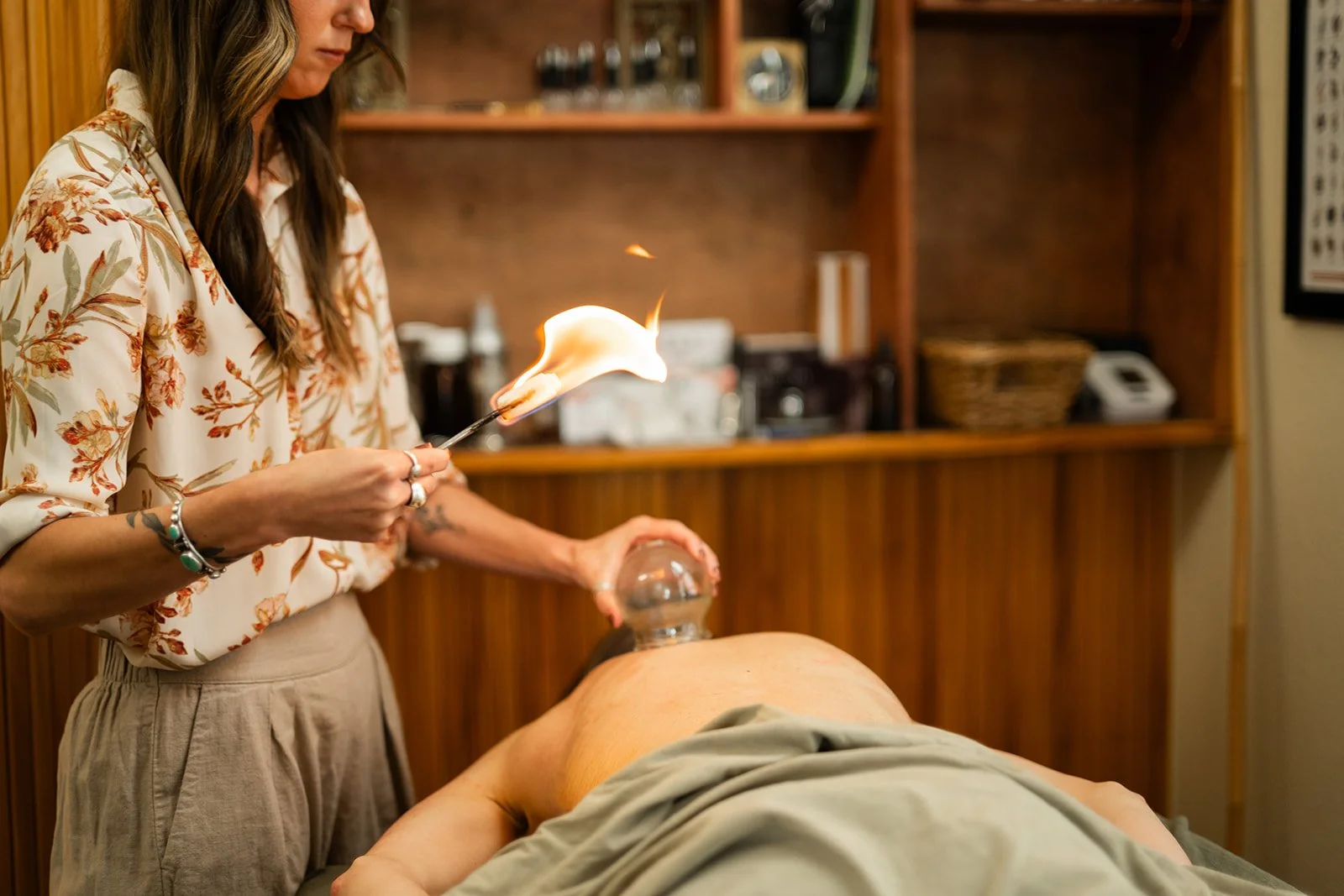
As healing progresses, acupuncture is paired with targeted cupping therapy to address myofascial restrictions and scar tissue formation. Surgical incisions heal by laying down dense collagen fibers in a disorganized pattern, which can bind to underlying muscles and limit range of motion. Cupping uses suction to decompress fascial layers, while specialized needling into scar margins can help improve tissue pliability over time.
Whether you are recovering from an ACL repair, a rotator cuff procedure, or an abdominal surgery, our practitioners design rehabilitation support that adapts to your surgical timeline and works safely around your medical hardware and incisions.
Can Chinese Herbal Medicine and Moxibustion Safely Support Healing After Surgery?
Chinese herbal medicine and moxibustion can support post-surgical recovery by addressing systemic depletion, improving the quality of newly formed blood, and using warming therapy to address residual joint stiffness. These classical modalities are most appropriate during the mid-to-late stages of recovery, once acute healing is underway and your medical team has cleared their use.
In the weeks following major surgery, patients often experience significant fatigue and systemic depletion — what Traditional Chinese Medicine classifies as a deficiency of Qi and Blood. The Spleen organ system, which governs the transformation of nutrients into vital energy, is frequently affected by the combined demands of anesthesia, pain medications, and the metabolic work of tissue regeneration. This can manifest as sluggish digestion, mental fog, and slowed wound healing.
To address this, we prescribe classical Chinese herbal formulas designed to tonify the Spleen, build Blood, and gently support the circulation of Qi. Our practitioners carefully review all herbal prescriptions to ensure they are introduced only when safe and compatible with your current post-operative care plan. Herb-drug interactions are taken seriously, and no formula is prescribed without a thorough intake.
For older adults and Boulder outdoor athletes recovering from orthopedic procedures, moxibustion is often integrated into the recovery protocol as well. This therapy uses the gentle burning of dried mugwort herb near specific acupuncture points to generate warmth that penetrates into joint tissue — stimulating circulation, dispersing cold-type stagnation, and providing relief for deep, aching joint pain that tends to worsen in cold weather.
By incorporating herbal therapy and moxibustion alongside acupuncture sessions at our Boulder clinic, we support recovery from multiple angles — addressing both the local tissue repair and the systemic energy needed to return to the activities you came here for.
If you are preparing for an upcoming procedure or navigating the recovery process, we invite you to speak with our team at Jade Mountain Health about how acupuncture and Chinese medicine can support your rehabilitation. Our clinic is located in the Wonderland Hills neighborhood of Boulder, Colorado, and we work with patients at every stage of the surgical process — from pre-operative preparation through full return to activity. Call us at (303) 859-3125 or schedule your initial consultation at jademtnhealth.com.