
Hip pain is among the most functionally limiting conditions we treat at Jade Mountain Health — and one of the most varied in its causes. For Boulder's runners and hikers, hip pain often stems from hip flexor tightness, piriformis syndrome, or bursitis that builds up over miles of trail use. For desk workers, it may be chronic tightness and weakness from prolonged sitting. For older patients, early hip arthritis may be the underlying driver. Regardless of cause, acupuncture and dry needling offer an effective, non-surgical path to relief that many patients haven't considered.
Whether you are training for an ultramarathon near the Flatirons, logging miles on the Mesa Trail, or dealing with the physical strain of sitting at a desk all day, hip discomfort can severely impact your mobility. At our clinic in North Boulder, located in the peaceful Wonderland Hills neighborhood off Broadway, we address these complex structural issues by combining classical Traditional Chinese Medicine with modern biomedical understanding.
What Are the Most Common Causes of Hip Pain in Boulder's Active Population?
The most common causes of hip pain in Boulder's active population include repetitive stress injuries from outdoor sports, muscular imbalances from steep trail descents, and postural strain from prolonged desk work. Clinical evidence indicates that these varied demands frequently result in conditions like hip flexor tendinitis, piriformis syndrome, iliotibial band friction, and greater trochanteric bursitis.
When you spend your weekends trail running or cycling in the Front Range, your hip joints and surrounding musculature endure significant repetitive force. This constant load can lead to micro-tears and localized inflammation in the tendons. For example, the repetitive hip flexion required for climbing steep inclines can cause the psoas and rectus femoris muscles to become chronically shortened and hypertonic.
Conversely, spending your weekdays sitting at a computer causes these same muscle groups to lock short while the gluteal muscles become structurally inhibited. This specific muscular imbalance forces the smaller stabilizing muscles, such as the piriformis, to work overtime to keep the hip joint secure. Over time, this overcompensation leads to deep, aching pain in the glutes or referral pain down the back of the leg.
Traditional Chinese Medicine views these localized conditions as a disruption in the smooth flow of Qi and Blood through the meridians that traverse the hip region. The Gallbladder and Urinary Bladder channels are the primary pathways affected by hip movement and stability. When repetitive strain or poor posture causes stagnation in these channels, it results in pain, stiffness, and decreased range of motion.
At Jade Mountain Health, our practitioners use precise diagnostic methods to determine which specific muscle groups and channels are involved. By identifying whether your hip pain is driven by acute structural strain or chronic postural stagnation, we can tailor an effective treatment plan to your unique mechanical needs.
How Does Acupuncture for Hip Pain Differ From Physical Therapy — and Can They Work Together?
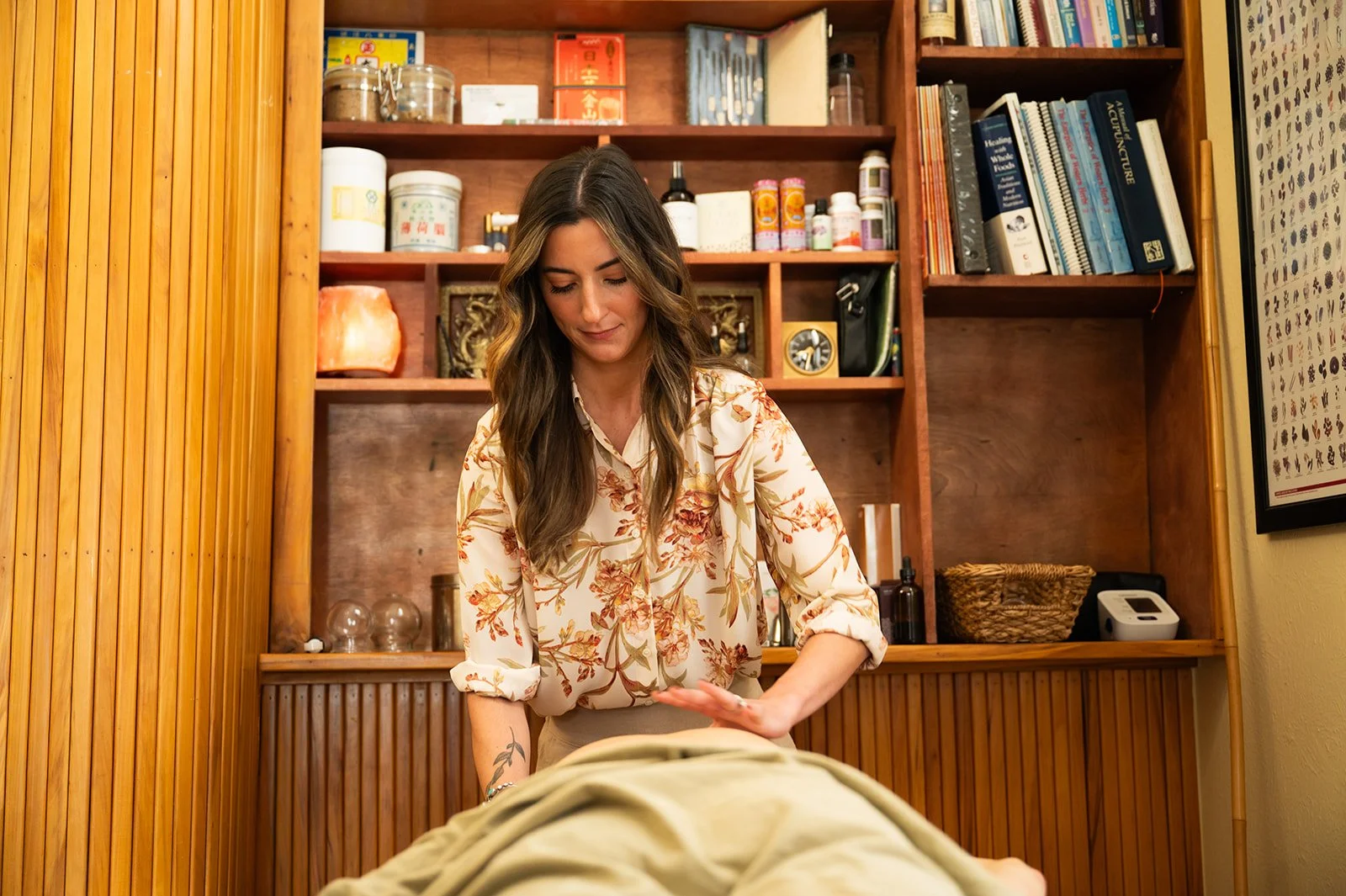
Acupuncture differs from physical therapy by directly modulating the nervous system and resetting muscle spindle fibers to reduce pain and hypertonicity, whereas physical therapy focuses primarily on correcting biomechanics through exercise and stretching. Clinical experience shows that these two modalities work together exceptionally well, as acupuncture can relax stubborn tissues so that physical therapy exercises can be performed more effectively.
Physical therapy is highly effective for strengthening weak muscle groups, improving joint mechanics, and correcting gait abnormalities that contribute to hip strain. However, when a muscle is caught in a chronic spasm or a protective guarding cycle, it can be incredibly difficult to strengthen or stretch that tissue safely. This is where classical acupuncture and modern dry needling provide an essential therapeutic bridge.
By inserting thin, sterile needles directly into specific trigger points or traditional acupuncture points, we can elicit a local twitch response. This mechanical response immediately relaxes the hypertonic muscle, improves local microcirculation, and interrupts the pain-spasm-pain cycle. Clinical studies suggest that this process stimulates the release of endorphins and down-regulates central nervous system pain signaling.
At Jade Mountain Health, Andrew Maloney and our clinical team utilize both Taiwanese and Japanese acupuncture lineages to restore optimal neuromuscular function. These precise needling techniques help clear local stagnation, allowing the surrounding tissues to receive the fresh oxygenated blood required for deep cellular repair.
Combining these approaches creates a powerful synergy for recovery. Receiving acupuncture at our Wonderland Hills clinic helps down-regulate your nervous system and release tight structures, making your subsequent physical therapy rehabilitation sessions significantly more productive and comfortable.
How Does Jade Mountain Health's Approach to Hip Pain Differ From a General Acupuncture Clinic?
Jade Mountain Health’s approach to hip pain differs by combining specialized orthopedic dry needling and classical meridian therapy with complementary modalities like advanced cupping and moxibustion under one roof. While a general clinic may rely solely on standard body acupuncture points, our practitioners integrate distinct Taiwanese and Japanese lineages with modern sports medicine to address the exact structural and fascial layers causing your discomfort.
A general acupuncture session often focuses broadly on systemic balance or stress reduction. While constitutional balance is vital, chronic hip pain in an active population requires a highly targeted structural intervention. Our treatments focus intensely on the local anatomy of the hip joint, isolating exact hypertonic trigger points in deep stabilizers like the gluteus medius, minimus, and piriformis.
Furthermore, we do not view acupuncture as a standalone tool. By pairing precise needling with negative-pressure cupping therapy to decompress the lateral hip fascia, we accelerate tissue gliding and expand your physical stride. If your hip pain stems from early joint degeneration or worsens during cold, damp Colorado winters, we integrate moxibustion—using the infrared heat of smoldering mugwort—to deeply warm the joint capsule and improve local fluid circulation.
This blended methodology ensures that your care is perfectly customized to your presentation, whether you are dealing with acute sports injuries or long-term structural wear. By choosing an orthopedic and lineage-trained practice, you receive an advanced level of physical assessment and clinical precision that goes far beyond general wellness protocols.
ready to explore what acupuncture can do for your hip pain?
We would love to hear from you. Chronic hip discomfort does not have to keep you off the trails or make your workday miserable. At Jade Mountain Health, our clinic is just a convenient ten-minute drive from Pearl Street in Boulder, Colorado. We provide personalized, evidence-informed care designed to get you moving freely again. You can reach Jade Mountain Health at (303) 859-3125 or schedule your initial consultation directly online at jademtnhealth.com.
Frequently asked questions about acupuncture for hip pain
-
Most patients notice a measurable change in pain levels, muscle tension, or range of motion within 3 to 5 treatments. Acute conditions, such as recent hip flexor strain from a single trail run, typically resolve much faster than chronic, long-term issues like deep joint arthritis or years of postural compensation from desk work. During your initial consultation, we will perform a comprehensive physical assessment to design a customized treatment plan that outlines exactly what to expect for your specific condition.
-
Acupuncture needles are exceptionally thin—roughly the width of a single strand of hair—and cause very little discomfort upon insertion. When targeting deep, hypertonic muscles like the piriformis or gluteus medius, you may feel a distinct dull ache, heavy sensation, or a brief muscle twitch. This "twitch response" is a positive clinical sign indicating that the nervous system has successfully reset the tight muscle spindle fibers, allowing the tissue to instantly relax and recover.
-
Yes, acupuncture is safe and highly beneficial after a total hip replacement, provided the surgical site is completely healed and you have been cleared by your orthopedic surgeon for complementary care. While we do not needle directly into the artificial joint itself, acupuncture and cupping therapy are incredibly effective at releasing the compensatory muscle tightness, scar tissue, and structural imbalances that often develop in the surrounding gluteal, lower back, and thigh muscles following surgery.