
Acupuncture for Cyclists in Boulder: Managing Knee Pain, Hip Tightness, and Overuse Injuries
Boulder is one of the premier cycling communities in the United States — from the flats along the Boulder Creek Path to the sustained climbs up Lefthand Canyon and beyond. With that volume of riding comes a predictable set of overuse injuries: IT band syndrome, patellofemoral pain, hip flexor tightness, and lower back strain that can accumulate over a long season.
At Jade Mountain Health in Boulder, Colorado, we work with cyclists at all levels — from recreational riders to competitive racers — using acupuncture, dry needling, and Chinese herbal medicine to support recovery and keep athletes training consistently. Located in North Boulder in the Wonderland Hills neighborhood, our clinic is easily accessible from across the city. Andrew Maloney, L.Ac., Dipl.OM, MSOM, and Nicole Bzdel, L.Ac., provide care that blends orthopedic assessment with Traditional Chinese Medicine, tailored to the demands of Front Range athletes.
What Are the Most Common Cycling Injuries Acupuncture Can Help Treat in Boulder?
Acupuncture is commonly used to support recovery from cycling-related overuse injuries by improving circulation, reducing muscle tension, and helping regulate pain signaling in affected tissues.
The most frequent conditions we see in the Boulder cycling community include IT band syndrome, patellofemoral pain, piriformis syndrome, and chronic lower back tension related to sustained riding posture. Because cycling involves thousands of repetitive movements, even small biomechanical inefficiencies can lead to tissue overload over time.
From a Traditional Chinese Medicine perspective, these patterns are often associated with Qi and Blood stagnation along the Gallbladder and Bladder channels, which run through the lateral and posterior aspects of the legs. When tissues are under repeated stress, circulation may become restricted, contributing to localized tightness and sensitivity.
Clinical research suggests acupuncture and dry needling may help reduce myofascial trigger point activity and improve neuromuscular function in affected muscle groups. This can be particularly relevant for knee pain that is influenced by upstream tension in the hips or quadriceps.
In addition, acupuncture may support the body’s recovery during periods of higher training volume by helping regulate the autonomic nervous system. Many athletes report improved recovery quality and reduced post-ride stiffness when treatment is used consistently.
At Jade Mountain Health, treatment focuses on both local tissue dysfunction and broader movement patterns to support more complete and lasting recovery.
How Does Acupuncture Fit Into a Boulder Cyclist’s Training and Recovery Plan?
Acupuncture can play a supportive role in a cyclist’s training plan by helping address minor imbalances early and improving overall recovery capacity between rides.
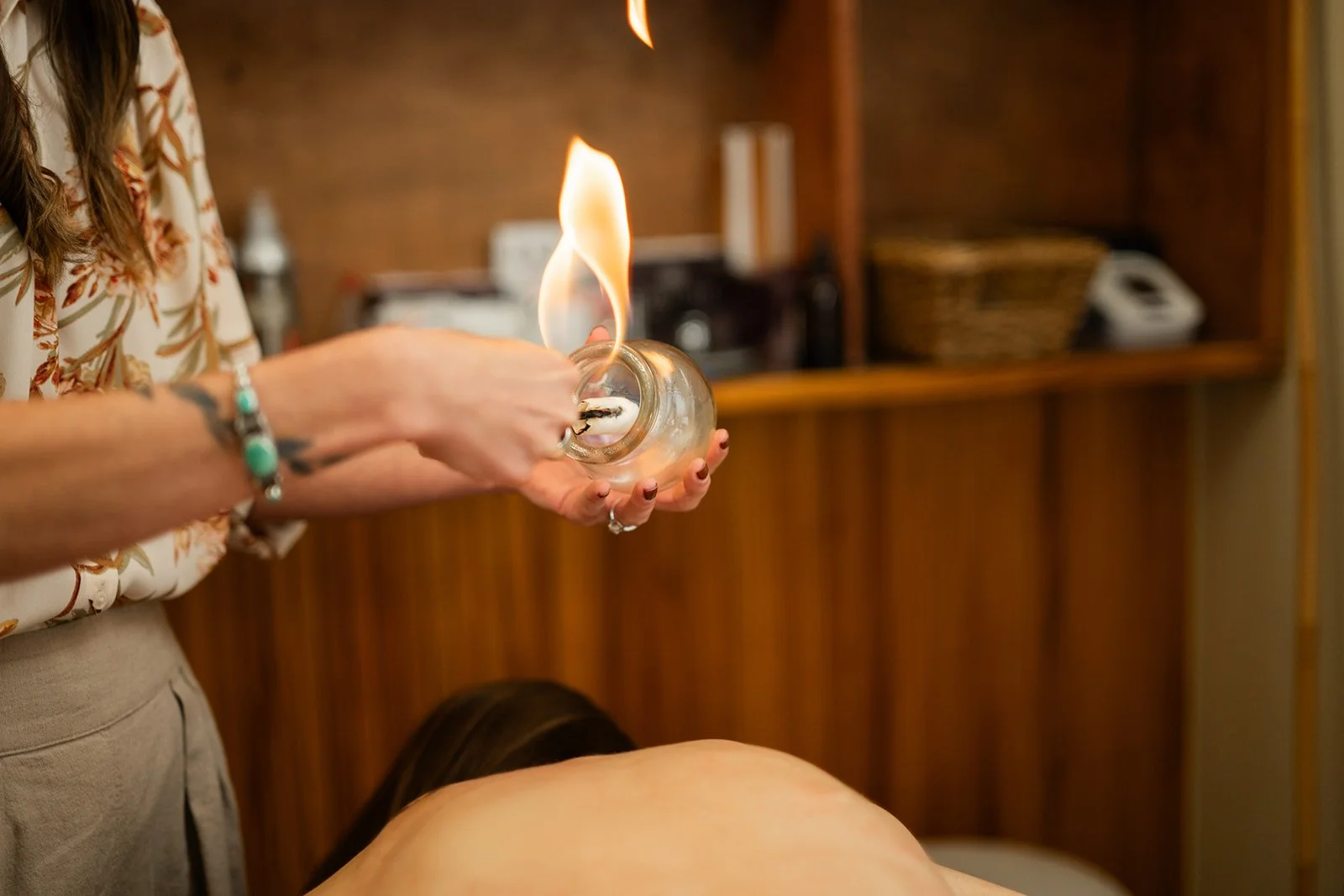
Fire Cupping Therapy at Jade Mountain Health
Many cyclists in Boulder use acupuncture as part of a proactive maintenance routine during both base training and peak riding seasons. The goal is not only to address pain when it arises, but also to support muscular recovery, reduce persistent tension patterns, and help the body adapt to ongoing training stress.
Some studies suggest acupuncture may influence stress regulation and support nervous system balance, which aligns with what we see clinically — many patients feel less fatigued and more recovered after treatment. While responses vary, this can be particularly helpful during periods of heavy riding, such as back-to-back climbs in the Front Range.
In practice, treatment often includes local needling of overused muscle groups such as the gluteals, hip flexors, or quadriceps, combined with distal acupuncture points that support systemic regulation. This combination can help cyclists dealing with tightness that does not fully resolve with stretching or foam rolling alone.
Adjunct therapies such as cupping may also be used when appropriate. Cupping applies suction to the skin to promote circulation and reduce myofascial tension, especially in larger muscle groups like the back and hips.
For cyclists training in Boulder’s high-altitude environment, this integrated approach can help maintain consistency and reduce the likelihood of recurring injury patterns over time.
Can Acupuncture Help With Hand Numbness and “Cyclist’s Palsy” During Long Rides?
Acupuncture may help reduce symptoms of hand numbness and nerve irritation associated with prolonged cycling posture by addressing muscular tension that contributes to nerve compression.
Sustained pressure on the handlebars, combined with forward head posture, can place stress on structures affecting the ulnar and median nerves. Over time, this may lead to tingling, numbness, or reduced grip endurance during longer rides.
Treatment typically focuses on releasing tension in contributing muscle groups such as the scalenes, upper trapezius, and pectoralis minor, while also addressing local forearm and wrist tension. This approach may help reduce mechanical irritation along nerve pathways and improve comfort on the bike.
In some cases, symptoms follow what is known as a “double crush” pattern, where nerve sensitivity is influenced at more than one point along its pathway. A full-body assessment helps determine whether symptoms are primarily originating from the neck, shoulder, or distal arm.
From a Traditional Chinese Medicine perspective, these symptoms may reflect Qi and Blood stagnation in the channels of the upper extremities. Treatment may include acupuncture and, when appropriate, Chinese herbal medicine to support circulation and tissue recovery.
While individual results vary, many cyclists report reduced tingling and improved endurance on longer rides when acupuncture is part of their overall recovery plan.
Ready to Ride Stronger and Recover Faster in Boulder?
Cycling in Boulder, Colorado places real, repeated demands on the body — especially across a long season of climbing, mileage, and technical riding. Recovery strategies need to be as consistent and intentional as training.
At Jade Mountain Health, Andrew Maloney and Nicole Bzdel provide acupuncture care designed specifically for active individuals navigating the physical demands of the Front Range. Whether you’re riding the Boulder Creek Path or climbing Lefthand Canyon, treatment is tailored to help you recover efficiently and keep riding without interruption.
To learn more or schedule an appointment, call (303) 859-3125 or visit jademtnhealth.com.
FREQUENTLY ASKED QUESTIONS
-
Acupuncture may help reduce inflammation, improve circulation, and relieve muscle tension contributing to cycling-related knee pain. Many cyclists use it alongside strength and mobility work to support recovery.
-
Frequency depends on training load and symptoms. During heavy riding periods, many cyclists benefit from weekly or biweekly treatments, while others use it as needed for flare-ups.
-
Dry needling and acupuncture both use thin needles, but they differ in approach. Dry needling typically targets muscle trigger points, while acupuncture also incorporates whole-body patterns based on Traditional Chinese Medicine.
-
Yes, acupuncture may help release tight hip flexors, gluteal muscles, and surrounding structures that become overworked during long rides.