
How TCM Addresses Hormonal Balance and Reproductive Wellness in Boulder
Women's health is one of the most established areas of Traditional Chinese Medicine — and one where acupuncture has a particularly strong clinical track record.
At Jade Mountain Health in Boulder, we see patients dealing with a wide range of women's health concerns: irregular or painful periods, PMS and PMDD, perimenopausal symptoms, fertility challenges, and the hormonal dysregulation that often accompanies chronic stress.
Our approach combines acupuncture, Chinese herbal medicine, and lifestyle guidance to address the underlying pattern — not just manage symptoms.
If you have been looking for a more integrative approach to your hormonal or reproductive health, here is what Traditional Chinese Medicine actually offers — and how it works.
What Women's Health Conditions Respond Well to Acupuncture and Chinese Medicine?
Acupuncture and Chinese herbal medicine have a well-documented history of treating a broad range of women's health conditions — from menstrual irregularity and pain to perimenopausal symptoms and fertility challenges. These are not fringe applications. The World Health Organization recognizes acupuncture for over 43 conditions, and gynecological disorders are among the most clinically supported.
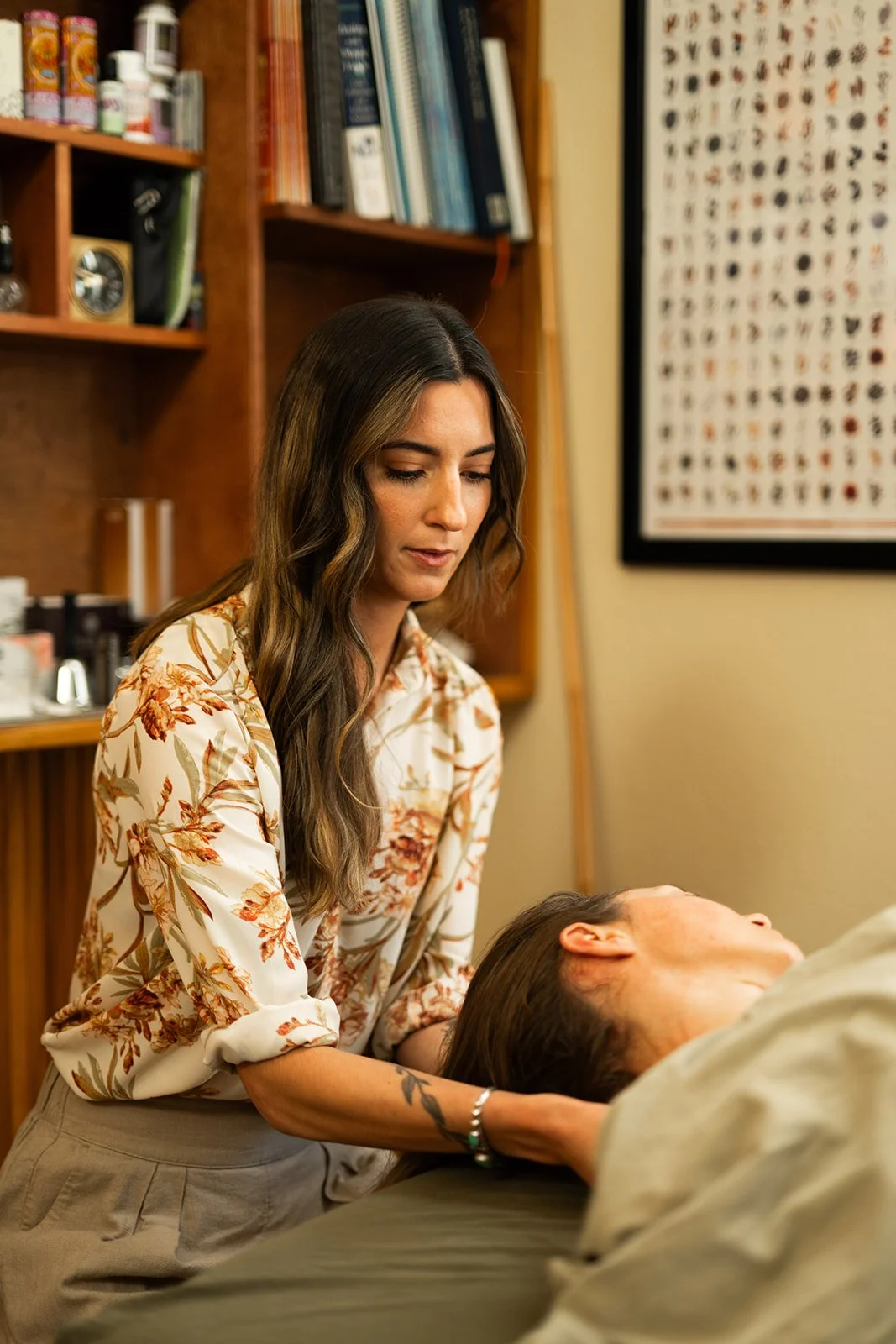
In practice, the conditions we treat most often at the clinic include:
Dysmenorrhea (painful periods), including cramping, back pain, and nausea associated with menstruation
Irregular cycles, including cycles that are too long, too short, or unpredictable
PMS and PMDD — mood changes, breast tenderness, bloating, and irritability in the days before menstruation
Perimenopausal symptoms such as hot flashes, night sweats, sleep disruption, and mood instability
Polycystic ovary syndrome (PCOS), particularly where it presents with irregular cycles or hormonal acne
Fertility support, both for natural conception and as an adjunct to IVF or IUI protocols
What makes Chinese medicine particularly well-suited to women's health is that it has always treated the menstrual cycle as a diagnostic window. The timing, flow, color, and quality of a patient's period — along with accompanying symptoms — give a trained practitioner significant information about what is dysregulated and where.
This is not symptom management. It is pattern recognition, and it shapes the entire treatment approach from the first visit.
How Does Acupuncture Support Hormonal Balance Without Synthetic Hormones?
Acupuncture supports hormonal balance by influencing the body's own regulatory systems — primarily the hypothalamic-pituitary-ovarian (HPO) axis, which governs the hormonal signaling that drives the menstrual cycle. Research suggests that acupuncture can modulate the release of gonadotropin-releasing hormone (GnRH), luteinizing hormone (LH), and follicle-stimulating hormone (FSH), all of which play central roles in ovulation and cycle regulation.
In practical terms, this means acupuncture is not introducing anything synthetic into the body. It is working with the body's existing signaling pathways to encourage more consistent, balanced output.
From a Traditional Chinese Medicine perspective, hormonal imbalance is understood through patterns of Qi and Blood — whether there is deficiency, stagnation, heat, or cold affecting the Liver, Kidney, or Spleen organ systems. These patterns are not metaphorical. They are clinical categories that correspond to recognizable symptom clusters and guide both acupuncture point selection and herbal formula design.
Andrew Maloney and the practitioners at Jade Mountain Health work from both frameworks simultaneously — using classical TCM diagnosis to identify the underlying pattern, and drawing on current research to understand the physiological mechanisms at play.
Chinese herbal medicine adds another layer of support. Classical formulas for women's health — many of which have been in clinical use for over a thousand years — can help regulate cycle timing, reduce inflammation associated with painful periods, and support the endocrine function that underpins hormonal balance.
The combination of acupuncture and herbal medicine is typically more effective than either alone, particularly for complex or long-standing conditions.
How Many Acupuncture Treatments Does It Take to See Results for Hormonal or Menstrual Issues?
Most patients notice meaningful changes within two to three menstrual cycles of consistent treatment. For acute symptoms — severe cramping, for example — relief can begin within the first one to two sessions. For deeper hormonal patterns like irregular cycles, PCOS, or perimenopausal symptoms, a longer course of treatment is typically needed to produce lasting change.
This is one of the questions we hear most often from new patients in Boulder, and it deserves a direct answer.
The honest answer is that the timeline depends on how long the pattern has been present, how complex it is, and how your body responds to treatment. A 23-year-old with a recent onset of cycle irregularity will generally respond faster than someone in their mid-forties managing a combination of perimenopause and long-standing Liver Qi stagnation.
What we generally see in practice: patients who come weekly for the first four to six weeks establish a foundation that makes ongoing treatment more effective. After that, many patients shift to every-two-week or monthly maintenance, depending on their goals.
Chinese herbal medicine, when included in the treatment plan, often accelerates results because it extends the therapeutic effect between acupuncture sessions. Rather than treating once a week and waiting, the herbs are doing quiet work in the background every day.
The goal at Jade Mountain Health is never to keep patients coming indefinitely. It is to resolve the underlying pattern as efficiently as possible and help patients understand what they can do on their own to maintain the results.
Jade Mountain Health is located in the Wonderland Hills neighborhood in North Boulder — off Broadway, about ten minutes from Pearl Street. If you are dealing with painful periods, hormonal irregularity, PMS, perimenopausal symptoms, or fertility questions, we would welcome the conversation.
Andrew Maloney and Nicole Bzdel bring deep training in both classical Chinese medicine and contemporary women's health to every patient they see. Our approach is thorough, individualized, and grounded in what the evidence actually supports.
To schedule or ask a question, you can reach Jade Mountain Health at (303) 859-3125 or book directly at jademtnhealth.com. We look forward to hearing from you.
Frequently Asked Questions About Acupuncture for Women’s Health
-
Acupuncture is commonly used in integrative and Traditional Chinese Medicine settings to support hormonal balance by influencing the body’s regulatory systems, including the hypothalamic-pituitary-ovarian (HPO) axis. Research suggests it may play a role in modulating hormonal signaling related to the menstrual cycle, though outcomes vary by individual and condition.
-
Acupuncture is often used as a complementary therapy for fertility support, both for natural conception and alongside IVF or IUI protocols. It is typically used to support cycle regulation, stress reduction, and overall reproductive system function. It should be considered an adjunct to, not a replacement for, medical fertility care.
-
Many patients notice changes within two to three menstrual cycles of consistent treatment. Some symptoms, such as menstrual cramping, may improve within the first few sessions, while more complex hormonal patterns typically require longer-term care.