
What Is Cupping Therapy and Why Are Boulder Wellness Patients Embracing It?
Cupping therapy has become far more visible over the past decade, partly because elite athletes began appearing at competitions with distinctive circular marks across their backs and shoulders. But cupping itself is not a trend. It has been used within Traditional Chinese Medicine for centuries to improve circulation, release myofascial tension, support respiratory function, and promote recovery. At Jade Mountain Health in Boulder, cupping is offered both as a standalone therapy and as part of acupuncture treatment plans when clinically appropriate.
For Boulder’s active community — trail runners climbing the Mesa Trail, cyclists grinding through Lefthand Canyon, climbers carrying accumulated tension through the shoulders and lats — cupping offers a different kind of tissue treatment than massage or stretching alone. Rather than pressing downward into restricted tissue, cupping uses suction to gently lift superficial layers of fascia and muscle, often helping areas that feel chronically tight or stuck.
It is also commonly used for patients who are not athletes at all. Many people seek cupping for stress-related neck and shoulder tension, headaches, respiratory congestion, or recovery after illness. In Boulder, Colorado, where high training loads and high work demands often overlap, cupping is frequently used to help patients shift out of patterns of chronic muscular guarding and physical overload.
How Does Cupping Work — and What Are Those Circular Marks That Athletes Have?
Cupping works by creating suction on the skin that lifts superficial tissue layers and increases local circulation. The circular marks left behind are not injuries; they are temporary discolorations caused by changes in blood flow and fluid movement within the tissue.
Most bodywork techniques apply compressive force into muscles and fascia. Cupping does the opposite. The suction gently decompresses tissue, which may help improve mobility, reduce muscle guarding, and increase circulation in areas of chronic restriction. Many patients describe the sensation as a pulling or stretching feeling rather than pain.
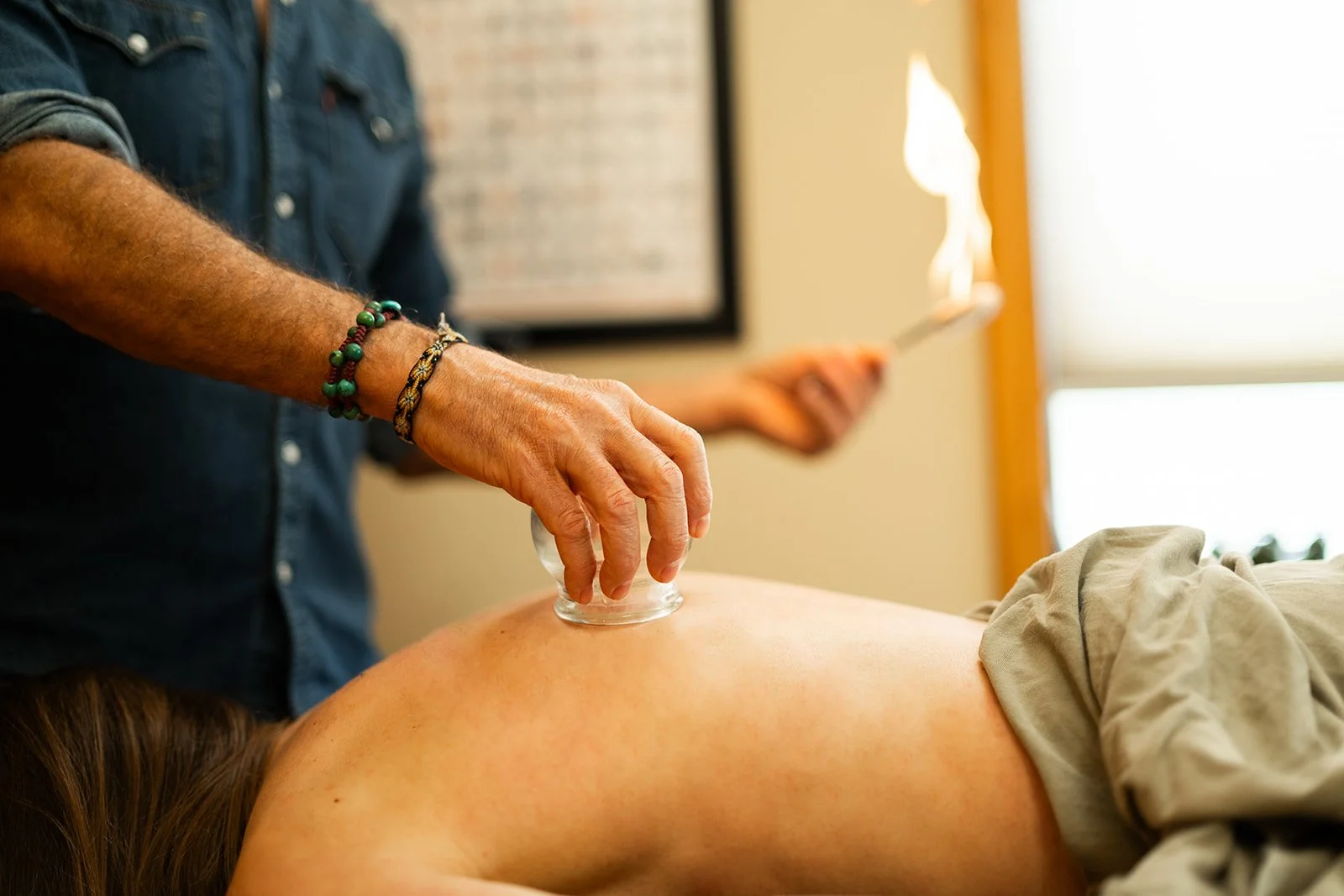
The marks themselves vary from light pink to darker purple depending on tissue condition, circulation, and suction intensity. In Traditional Chinese Medicine, darker marks are often interpreted as a sign of greater stagnation of Qi and Blood in the affected area. From a biomedical perspective, the marks reflect superficial capillary response and localized circulation changes caused by suction. They are typically painless and usually fade within several days.
At Jade Mountain Health, practitioners use both traditional fire cupping and modern silicone cups depending on the patient’s condition and comfort level. Sliding cupping — where cups are moved across the back after oil is applied — is commonly used for broad areas of tension along the thoracic spine, shoulders, and upper back.
For some Boulder patients, especially cyclists, desk workers, and climbers, cupping can reach patterns of fascial restriction that have not responded fully to stretching or massage alone. Andrew Maloney often integrates cupping into acupuncture sessions when tissue tension, circulation, or recovery support are central parts of the treatment plan.
What Conditions Does Jade Mountain Health Treat With Cupping in Boulder?
At Jade Mountain Health, cupping is commonly used to support treatment for musculoskeletal tension, myofascial restriction, stress-related tightness, respiratory congestion, and athletic recovery. It is most appropriate when tissue tension, restricted circulation, or stagnation are contributing to symptoms.
In the clinic’s Boulder practice, cupping is frequently used for:
Upper back and neck tension related to desk work or posture
Shoulder and lat tightness in climbers and overhead athletes
Hip and IT band tightness in runners and cyclists
Stress-related muscular tension patterns
Delayed recovery after intense training
Respiratory congestion associated with colds or seasonal illness
In Traditional Chinese Medicine, cupping is often used to move stagnant Qi and Blood and to help release external pathogens affecting the respiratory system. Clinically, many patients report that treatments help them feel less restricted, breathe more comfortably, or recover more efficiently from muscular fatigue.
For active patients in Boulder, Colorado, cupping is often integrated into broader acupuncture treatment plans during periods of heavy training or after demanding races and outdoor events. Because Boulder sits above 5,400 feet, recovery demands can accumulate quickly, especially for endurance athletes balancing work stress with high physical output.
At Jade Mountain Health, treatment decisions are individualized. Andrew Maloney and Nicole Bzdel assess tissue quality, recovery capacity, health history, and overall presentation before deciding whether cupping is appropriate and how much stimulation to use. The goal is not to create dramatic marks. It is to apply the right amount of treatment for the patient’s condition and recovery capacity.
Cupping is not appropriate in every situation. It is generally avoided over inflamed skin, open wounds, varicose veins, or areas of acute injury, and practitioners use added caution with patients who bruise easily or take blood-thinning medications.
Is Cupping Safe, and What Does a Treatment Usually Feel Like?
Cupping is generally safe when performed by a licensed practitioner, and most patients find the treatment much more comfortable than they expected. The sensation usually feels like steady pressure or pulling rather than sharp pain.
During treatment, cups may remain stationary or glide across the skin depending on the treatment goal. Some patients feel an immediate release in tight areas, while others notice changes later that day or after a night of sleep. Mild soreness can occur after treatment, particularly in areas with longstanding tension, but it usually resolves quickly.
At Jade Mountain Health in North Boulder, treatments are adjusted carefully based on patient comfort, tissue sensitivity, and health history. Someone recovering from intense training may tolerate stronger suction than a patient seeking relief from stress-related tension or post-illness fatigue.
Patients are often most concerned about the visible marks left after treatment. These marks are temporary and usually not tender. However, because they can remain visible for several days, it is worth planning ahead before vacations, competitions, or events where shoulders or back skin will be exposed.
Cupping is also modified or avoided in certain situations, including pregnancy over specific body regions, active skin irritation, open wounds, or significant inflammation. A proper intake and physical assessment help ensure the treatment is both appropriate and effective.
For patients who are uncertain about trying cupping, beginning with lighter suction and shorter treatment times is often the best approach. This allows the body to respond gradually while still providing meaningful therapeutic benefit.
If you are curious about cupping therapy for recovery, muscular tension, stress, or respiratory support, Jade Mountain Health offers individualized treatment grounded in Traditional Chinese Medicine and informed by Boulder’s active lifestyle culture. The clinic is located at 745 Poplar Ave in Boulder, Colorado, in Wonderland Hills just off Broadway and about 10 minutes from Pearl Street. Whether you are recovering from long days in the Flatirons or simply carrying too much tension through your shoulders and back, the team can help determine whether cupping is appropriate for your situation. To schedule an appointment, visit jademtnhealth.com or call (303) 859-3125.ach Addresses Stress and Emotional Health