
Acupuncture for Plantar Fasciitis in Boulder: Heel Pain Relief for Runners and Hikers
Plantar Fasciitis Won't Go Away? How Acupuncture and Dry Needling Support Heel Pain Recovery in Boulder
Plantar fasciitis is one of the most stubborn injuries in Boulder's running and hiking community — the kind of heel pain that flares up the moment you step out of bed in the morning, eases through the day, and then returns if you push too hard on a trail run or long hike. Standard treatments like stretching, orthotics, and cortisone injections help some people but leave many others searching for a more complete approach. At Jade Mountain Health, we approach plantar fasciitis with a combination of dry needling to release fascial tension directly and acupuncture to support circulation, reduce pain, and address the broader patterns that can slow healing. If you have been dealing with persistent heel pain and are not getting the progress you expected, here is what is happening in the tissue — and how acupuncture and dry needling are used clinically to support recovery.
Why Is Plantar Fasciitis So Common in Boulder — and Why Does It Heal So Slowly?
Plantar fasciitis is especially common in Boulder because the activities that define life here — trail running, hiking with steep elevation gain, long cycling efforts, and high-mileage training blocks — place repetitive stress on the plantar fascia over time. The condition also tends to heal slowly because connective tissue has relatively limited blood supply compared to muscle tissue.
The plantar fascia is a thick band of connective tissue that runs along the bottom of the foot, connecting the heel bone to the base of the toes. Its role is to absorb load and support the arch with every step. Under the kind of loading generated by Flatirons hikes, Mesa Trail runs, or long descents on technical terrain, micro-irritation can accumulate faster than the tissue repairs itself.
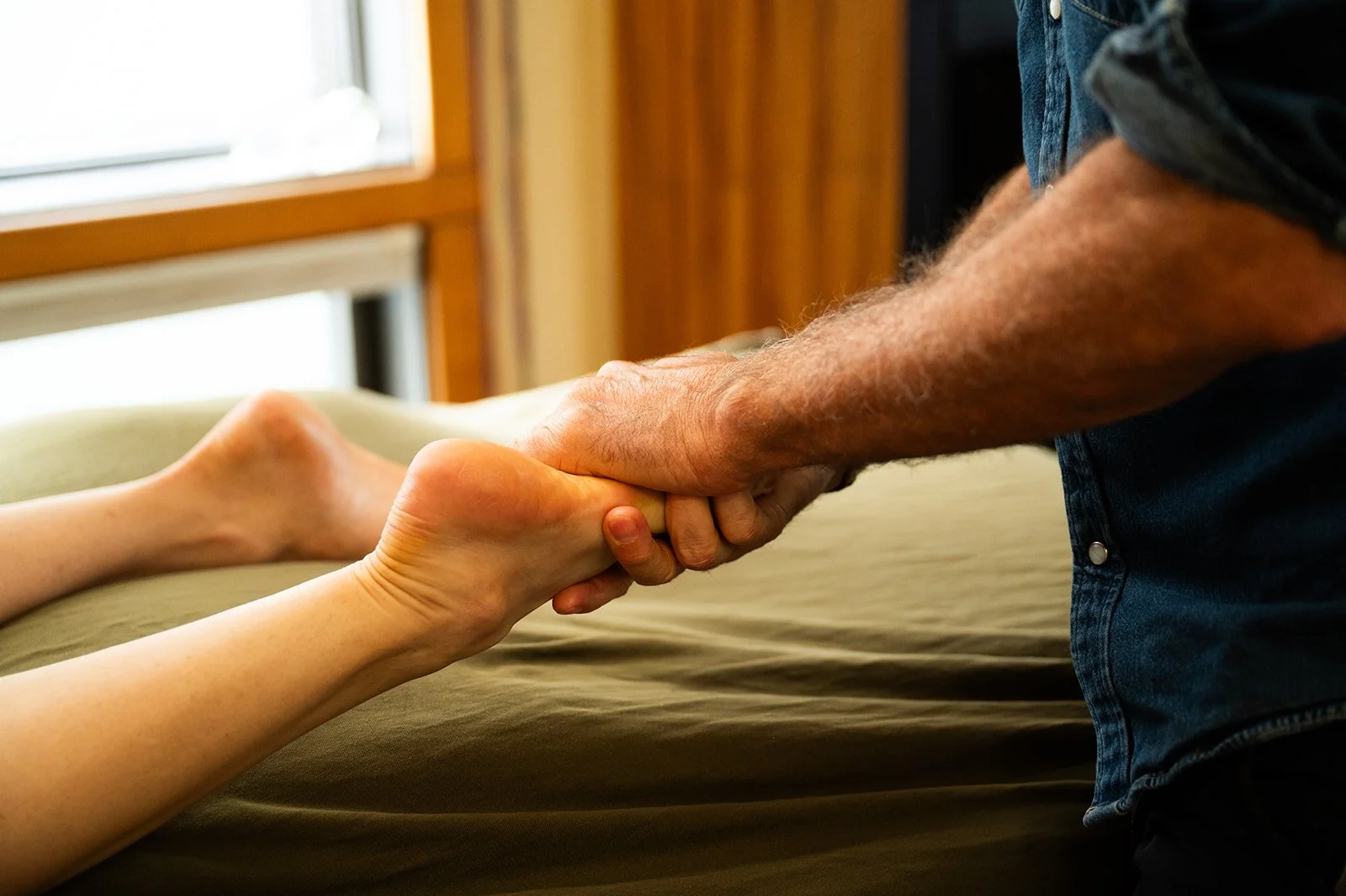
This is one of the main reasons plantar fasciitis can become chronic. Stretching and orthotics may reduce mechanical stress on the tissue, but they do not always address the limited circulation and persistent tension contributing to delayed recovery.
The sharp morning pain that many patients describe — that stabbing sensation during the first steps out of bed — reflects how the fascia tightens overnight and reacts when suddenly loaded again in the morning. Symptoms often improve temporarily as the tissue warms up and circulation increases with movement.
From a Traditional Chinese Medicine perspective, chronic plantar fasciitis often involves patterns of Qi and Blood stagnation, sometimes combined with underlying Kidney deficiency. In classical theory, the Kidney system governs the bones and contributes to the body's deeper constitutional reserves and recovery capacity. When recovery is insufficient relative to training load, overuse injuries may become more persistent and slower to resolve.
At Jade Mountain Health in Boulder, Andrew Maloney commonly sees this pattern in runners, hikers, and endurance athletes trying to stay active through ongoing heel pain rather than allowing the tissue adequate recovery time.
How Does Dry Needling for Plantar Fasciitis Work — and How Is It Different From Cortisone?
Dry needling for plantar fasciitis works by inserting a fine filiform needle into affected tissue to stimulate circulation, release myofascial tension, and encourage a localized healing response. Cortisone works differently: it suppresses inflammation and may reduce pain temporarily, but it does not directly stimulate tissue repair.
For some acute cases, cortisone injections can provide short-term symptom relief. However, repeated corticosteroid injections may weaken connective tissue over time, particularly in chronically irritated structures.
Dry needling takes a different approach. By mechanically stimulating the tissue, it encourages increased blood flow and neuromuscular release in areas that have become restricted or chronically irritated. Research suggests dry needling may help reduce pain and improve function in myofascial and tendinous conditions, though outcomes vary between individuals.
At Jade Mountain Health, dry needling treatment for plantar fasciitis often includes the plantar fascia itself, the intrinsic foot musculature, and the calf complex — particularly the gastrocnemius and soleus muscles. Tightness through the posterior chain can significantly increase tension on the plantar fascia during walking, running, and hiking, which is why treating the lower leg is often just as important as treating the foot.
Acupuncture is typically used alongside dry needling rather than as a completely separate treatment approach. Acupuncture points along the Kidney and Bladder meridians, which travel through the foot and lower leg, are commonly selected to support circulation, reduce pain sensitivity, and promote tissue recovery.
Moxibustion may also be used in some cases. Moxibustion is a warming therapy that uses dried mugwort near acupuncture points to increase circulation and address cold-type patterns identified in Traditional Chinese Medicine diagnosis.
The goal is not simply to suppress symptoms temporarily, but to improve how the tissue functions and heals over time so patients can return to activity with less recurrence.
How Many Acupuncture and Dry Needling Treatments Does Plantar Fasciitis Usually Take?
Most patients with plantar fasciitis notice meaningful improvement within four to six treatments, while chronic cases often require a longer course of care. The exact timeline depends on how long symptoms have been present, overall recovery capacity, training load, and whether contributing biomechanical factors are being addressed alongside treatment.
This is one of the most common questions Andrew Maloney hears from Boulder runners and hikers frustrated by months of lingering heel pain.
Acute plantar fasciitis often responds relatively quickly. Many patients notice reduced morning pain and improved tolerance for activity within the first several treatments. Chronic cases — especially symptoms that have persisted for six months or longer — generally require more time because the tissue has been under strain for a much longer period.
What matters most early on is whether the condition is moving in the right direction. Patients often report a gradual reduction in morning pain, less soreness after activity, and improved recovery between runs or hikes within the first few weeks of consistent care.
Treatment at Jade Mountain Health also typically includes guidance outside the treatment room. Patients may receive stretching recommendations for the calf and plantar fascia, advice on footwear and activity modification, and in some cases herbal soaks traditionally used in Chinese medicine to promote circulation in the lower extremities.
For Boulder athletes trying to stay active on the trails while recovering, these details matter. Continuing to overload irritated tissue without improving recovery mechanics is one of the most common reasons plantar fasciitis becomes chronic.
The goal is not ongoing treatment indefinitely. The goal is to help patients return to hiking, running, and daily activity with less pain and better long-term tissue resilience.
Jade Mountain Health is located in the Wonderland Hills neighborhood of North Boulder, off Broadway and about ten minutes from Pearl Street. If heel pain has been limiting your running, hiking, or day-to-day activity, we would be glad to help you understand what may be contributing to the problem and whether acupuncture or dry needling could be appropriate for your situation.
Andrew Maloney, L.Ac., Dipl.OM, MSOM, combines acupuncture, dry needling, and Traditional Chinese Medicine approaches tailored to the individual rather than applying the same protocol to every case. To schedule an appointment or ask a question, contact Jade Mountain Health at (303) 859-3125 or book online at jademtnhealth.com.
Frequently Asked questions about acupuncture for heel pain relief
-
Acupuncture is commonly used to support recovery from plantar fasciitis by helping reduce pain, improve local circulation, and address muscular tension contributing to strain on the plantar fascia. Many patients use it alongside stretching, footwear changes, and physical therapy approaches.
-
Dry needling typically targets tight or dysfunctional muscle and fascial tissue directly, while acupuncture uses a broader Traditional Chinese Medicine framework that may also address pain regulation, circulation, nervous system balance, and recovery patterns. At Jade Mountain Health, the two approaches are often used together for plantar fasciitis treatment.
-
Many patients notice improvement within four to six treatments, though chronic plantar fasciitis often requires a longer course of care. Recovery time depends on factors like symptom duration, training load, footwear, calf mobility, and overall tissue recovery capacity.