
Can Acupuncture Help With Depression? What Boulder Patients Should Know About Electroacupuncture and Mood
Depression affects millions of Americans, and Boulder is no exception — even in a community known for outdoor activity and a strong wellness culture. At Jade Mountain Health, we offer acupuncture and electroacupuncture as supportive, evidence-informed approaches to mood regulation that work through the nervous system and stress-response pathways.
For many patients, acupuncture is most effective when used alongside psychotherapy and medical care rather than as a standalone treatment. While individual responses vary, some patients report improvements in sleep, energy, and emotional regulation within the first few weeks of care.
How Does Electroacupuncture Affect Mood Regulation and the Nervous System?
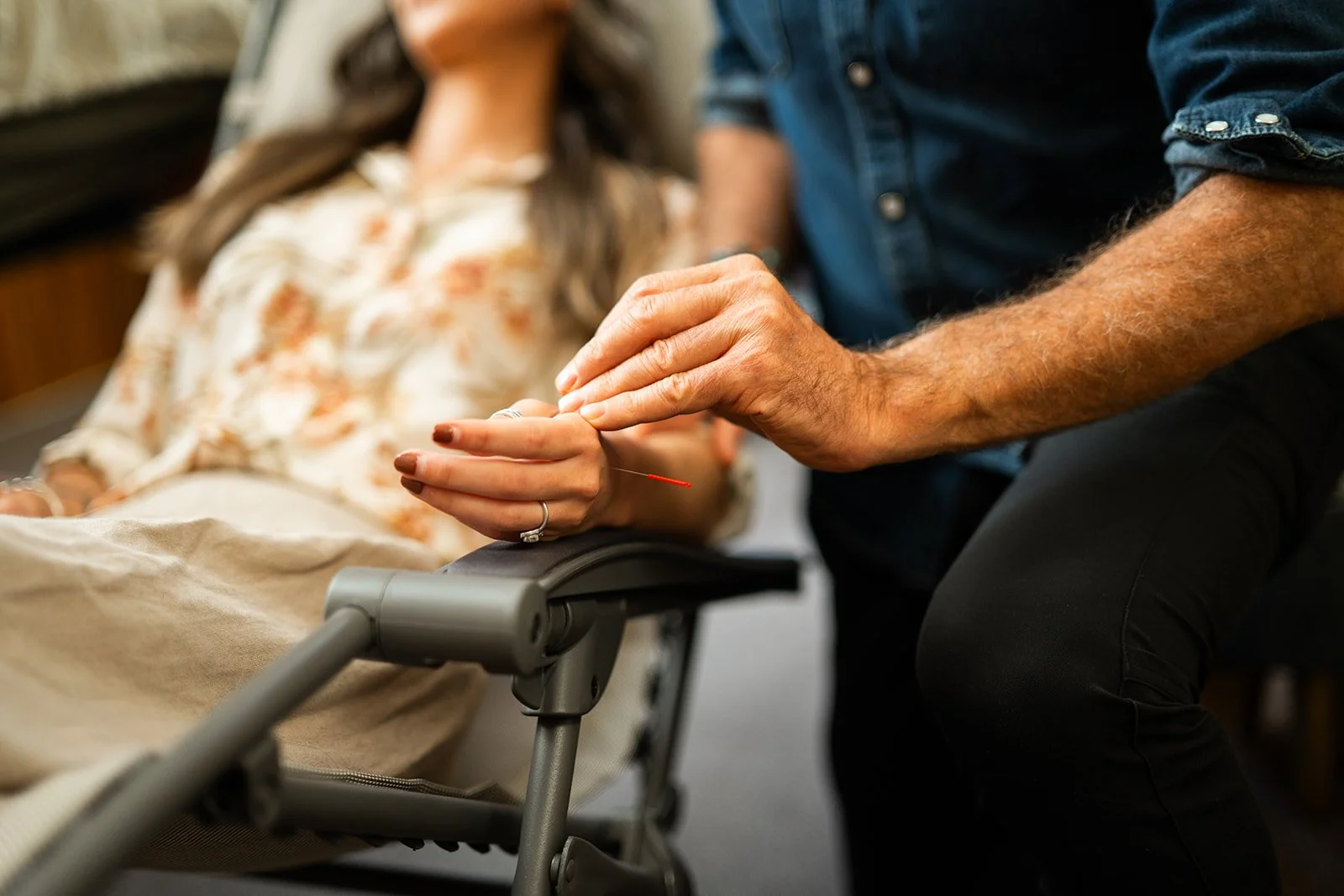
Electroacupuncture uses gentle electrical stimulation applied through acupuncture needles to influence the nervous system and may support the body's natural regulation of stress and mood-related processes. It is distinct from TENS therapy — the stimulation is delivered through needles already placed at specific acupuncture points, with the intent of amplifying the treatment's effect rather than providing surface-level electrical stimulation.
Research suggests that acupuncture and electroacupuncture may influence neurotransmitter activity associated with mood regulation, including serotonin and dopamine pathways, as well as stress-response systems such as the hypothalamic-pituitary-adrenal (HPA) axis. These effects are generally understood as modulatory rather than direct or pharmaceutical-like.
From a physiological perspective, electroacupuncture may help shift the nervous system from a chronically activated sympathetic state toward a more regulated parasympathetic state — associated with rest, recovery, and emotional balance. Some research also points to potential effects on neuroplasticity, which is one reason it is being explored as a complementary therapy for individuals experiencing persistent low mood or fatigue.
In Traditional Chinese Medicine, depression is often described in terms of Qi stagnation or deficiencies in systems associated with emotional regulation — particularly the Liver, which governs the smooth flow of Qi and emotions, and the Heart, which governs the mind and Shen. These frameworks are not direct biomedical equivalents, but rather a traditional way of describing patterns of imbalance in how a person feels and functions. During intake, Andrew Maloney uses pulse and tongue evaluation alongside a detailed history to identify which patterns are most relevant to your presentation.
Electroacupuncture is often used in these cases to provide a stronger stimulus for shifting stagnation patterns and supporting a more balanced physiological state.
Is Acupuncture for Depression a Replacement for Medication — or a Complement to It?
Acupuncture is best understood as a complementary therapy — one that may be used alongside medication, psychotherapy, and other forms of mental health care, not as a replacement for them.
It is not a substitute for antidepressant medication or psychiatric treatment. Instead, it is often used to support overall well-being, particularly in areas such as sleep quality, stress regulation, energy levels, and physical symptoms that commonly accompany depression. Some research suggests that patients receiving acupuncture in combination with standard care may experience greater improvements in overall well-being compared to standard care alone, though individual outcomes vary.
At Jade Mountain Health, we work within an integrative framework and encourage coordination with your existing healthcare providers when appropriate. This helps ensure that care is safe, consistent, and aligned with your broader treatment plan.
One practical advantage of acupuncture in this context is that it addresses the whole-body experience of depression. Fatigue, disrupted sleep, and digestive changes are common alongside mood symptoms — and by supporting these physical systems, patients often find it easier to engage in other aspects of care, including therapy, movement, and time outdoors on the trails around the Flatirons.
Can Acupuncture Help With the Physical Symptoms of Depression Like Fatigue and Heaviness?
Acupuncture may help support the physical symptoms that often accompany depression — low energy, heaviness, and reduced motivation — by influencing how the body regulates energy, circulation, and stress response. For many people, depression is not only emotional but also deeply physical, experienced as slowed movement, low drive, or difficulty initiating daily tasks.
In Traditional Chinese Medicine, these experiences are sometimes described using patterns such as Qi deficiency or dampness — not literal physical substances, but descriptive frameworks for explaining how symptoms cluster together in the body and mind. Treatment at Jade Mountain Health in these cases is often focused on supporting the systems associated with energy regulation and recovery.
Acupuncture may also support sleep quality, which is closely linked to mood regulation. When sleep becomes more restorative, many patients in Boulder find that emotional processing and daily motivation become more manageable over time — and that small physical improvements are often early signs that overall resilience is building.
If you're ready to explore what acupuncture can do for mood and mental health, we'd love to hear from you. Supporting mental health is a complex, ongoing process, and at Jade Mountain Health, we provide a grounded, integrative space where acupuncture can be part of that support.
Our North Boulder clinic in Wonderland Hills offers a calm environment for care tailored to the needs of the Boulder community. Reach us at (303) 859-3125 or schedule directly at jademtnhealth.com to learn how acupuncture may complement your existing mental health care and support your overall well-being in the Front Range.
FAQs About Acupuncture & Electroacupuncture for Depression in Boulder
-
No. Electroacupuncture delivers low-frequency electrical stimulation through acupuncture needles already placed at specific points on the body — the intent is to amplify the effect of the needles themselves. TENS therapy uses surface electrodes applied to the skin and works primarily by interrupting pain signals. The mechanisms and clinical applications are meaningfully different.
-
Acupuncture doesn't target a single neurotransmitter the way antidepressant medications do. Instead, research suggests it may support broader regulatory processes — including stress-response systems, sleep quality, and autonomic nervous system balance — that are often disrupted alongside depression. At Jade Mountain Health, treatment also addresses the physical symptoms that accompany mood disorders, such as fatigue, digestive changes, and disrupted sleep, which medication alone may not fully resolve.
-
Acupuncture is generally considered safe to use alongside psychiatric medications and does not interact with them pharmacologically. Andrew Maloney will review your full health history and current medications during intake. If you're working with a psychiatrist or therapist, we encourage coordination between providers — our goal is to complement your existing care, not complicate it.