
Chronic fatigue is one of the most frustrating conditions to experience because standard medical testing often does not fully explain what you're feeling. Labs may come back normal, yet energy remains low day after day — especially in an active place like Boulder where people expect their bodies to keep up with hiking, cycling, and demanding work schedules.
In Traditional Chinese Medicine (TCM), fatigue is viewed as a functional pattern involving Qi, Blood, or Yang that may become depleted or imbalanced over time. At Jade Mountain Health in Boulder, we approach fatigue by looking at how these patterns may be contributing to low energy, rather than focusing on a single symptom in isolation. Treatment may include acupuncture, moxibustion, and Chinese herbal medicine to support the body's ability to restore energy over time.
What Does Chinese Medicine Say About Chronic Fatigue — and Is It Different From What Your Doctor Tells You?
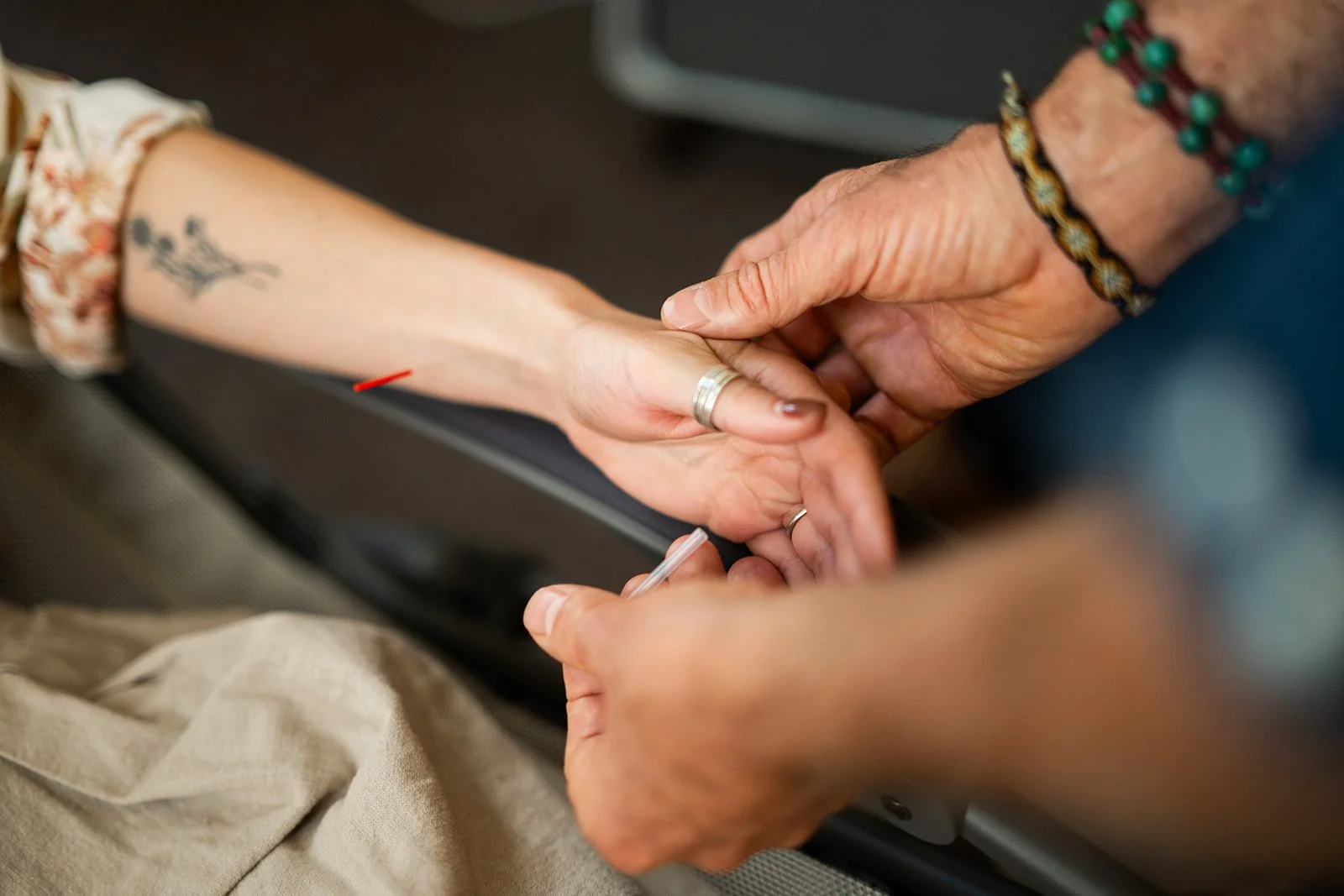
Traditional Chinese Medicine views chronic fatigue as a functional imbalance in how the body generates, distributes, and maintains energy — rather than a single measurable disease process. Conventional medicine often evaluates fatigue through lab markers such as thyroid function, iron levels, or metabolic indicators, and in many cases, these tests are genuinely helpful. But when lab work is within normal ranges and fatigue continues, TCM offers an additional lens for understanding how the body is functioning as a whole.
In our Boulder practice, we commonly see fatigue patterns that present in different ways. What is described in TCM as Spleen Qi deficiency is often associated with low energy after eating, mental fog, or a sense of heaviness. Kidney Yang patterns may present as deep fatigue, cold sensitivity, or low motivation, while Lung Qi patterns may be associated with shortness of breath or recurring respiratory issues.
During intake, Andrew Maloney uses traditional diagnostic methods — pulse and tongue evaluation among them — to build a broader clinical picture. This is not a replacement for medical testing but can complement it by offering additional insight into how stress, lifestyle, recovery, and constitution may be affecting energy levels over time. The goal is to support these patterns through acupuncture and related therapies to help restore a more stable baseline of energy for daily life in Boulder, Colorado.
Can Acupuncture and Moxibustion Together Help Restore Energy Levels Over Time?
Yes — acupuncture and moxibustion are often used together in TCM specifically because they address fatigue through complementary mechanisms. Acupuncture supports circulation, reduces muscular tension, and helps regulate autonomic nervous system activity. Moxibustion applies gentle heat to specific acupuncture points using dried mugwort to provide a warming, tonifying effect — making it particularly well-suited for fatigue that feels cold, heavy, or worse with inactivity.
Some research suggests that moxibustion may support circulation and aspects of stress-response regulation, though it is best understood as part of a broader traditional system of care rather than a standalone intervention. In clinical practice, it is commonly applied to points such as ST36 (Zusanli) or CV4 (Guanyuan) — points associated with supporting digestive and foundational energy in classical theory.
In Boulder and the surrounding Front Range, many patients notice fatigue becoming more pronounced during seasonal transitions or periods of high physical demand. At Jade Mountain Health, acupuncture and moxibustion are typically delivered in a series of treatments rather than a single session, as improvements in energy tend to build gradually. Many patients report that symptoms such as afternoon fatigue or post-activity exhaustion begin to shift as treatment progresses, particularly when combined with appropriate rest and lifestyle adjustments.
How Do I Know if My Fatigue Is Caused by Stress or Physical Depletion?
In Traditional Chinese Medicine, stress and physical depletion often overlap — and distinguishing between them matters for treatment because the approach differs meaningfully depending on which pattern is more dominant.
Stress-related fatigue is often associated with what TCM describes as Liver Qi stagnation. This pattern may feel like being tired but mentally overactive, restless, or emotionally tense — common in individuals under sustained work pressure or who experience chronic mental stimulation without adequate recovery time. Acupuncture may help here by supporting a shift in autonomic nervous system activity toward a more restorative state.
Physical depletion patterns are generally deeper. They may include low stamina, reduced appetite, difficulty concentrating, or a persistent sense of weakness after exertion — fatigue that does not improve quickly with rest. For these presentations, treatment tends to focus more on rebuilding functional reserves and supporting overall vitality over time.
In practice, many patients in Boulder present with both. A physically active lifestyle combined with high work demands can create a cycle where the body is both overused and under-recovered. At Jade Mountain Health, treatment planning is adjusted based on which pattern appears more dominant, and lifestyle recommendations are tailored accordingly — lighter, recovery-focused movement for stress-heavy presentations, and prioritized rest and nourishment for more depleted ones.
If you're ready to explore what acupuncture can do for chronic fatigue, we'd love to hear from you. Improving energy is not just about doing more — it's about restoring balance so your body can keep up with the life you want to live in Boulder, Colorado.
At Jade Mountain Health, we take a thoughtful, individualized approach to understanding fatigue and supporting long-term recovery. Our North Boulder clinic in Wonderland Hills provides a calm, professional setting for care. Reach us at (303) 859-3125 or schedule directly at jademtnhealth.com.
FAQs about Acupuncture & Moxibustion for Fatigue
-
Acupuncture does produce a relaxation response, but for fatigue, the clinical intent goes well beyond that. Treatment is directed at specific patterns — such as Spleen Qi deficiency or Kidney Yang depletion — that TCM associates with low energy production and poor recovery. Many patients report meaningful improvements in sustained energy, not just short-term relief, particularly over a course of several treatments.
-
Most patients begin noticing a shift in energy within four to six sessions, though this varies depending on how long the fatigue has been present and which patterns are involved. Chronic or long-standing fatigue generally requires a longer course of treatment than acute or situational tiredness. At Jade Mountain Health, we reassess regularly so treatment stays responsive to how you're progressing.
-
Moxibustion is a warming therapy that uses dried mugwort burned near acupuncture points — it is safe when applied by a trained practitioner and is not used on everyone. At Jade Mountain Health, it's recommended specifically for fatigue presentations that fit a cold or deficient pattern, such as fatigue accompanied by cold sensitivity, low motivation, or poor circulation. If it isn't a good fit for your presentation, it won't be part of your treatment plan.