
If you've been dealing with a stubborn muscle injury — a climbing strain, a cycling overuse issue, or a recurring trigger point in your neck or shoulder — you've likely come across both acupuncture and dry needling as treatment options. Both use very fine needles, and both can reduce pain and improve function, but they come from different clinical frameworks and are used with different goals in mind.
At Jade Mountain Health, our licensed acupuncturists are trained in acupuncture as well as trigger point needling techniques, allowing us to work across both traditional and modern approaches when appropriate. Located in the Wonderland Hills neighborhood off Broadway, the clinic serves North Boulder and is only a ten-minute drive from Pearl Street. Andrew Maloney and Nicole Bzdel provide clinical care that integrates both systems to support recovery, reduce pain, and improve movement efficiency for active Boulder residents.
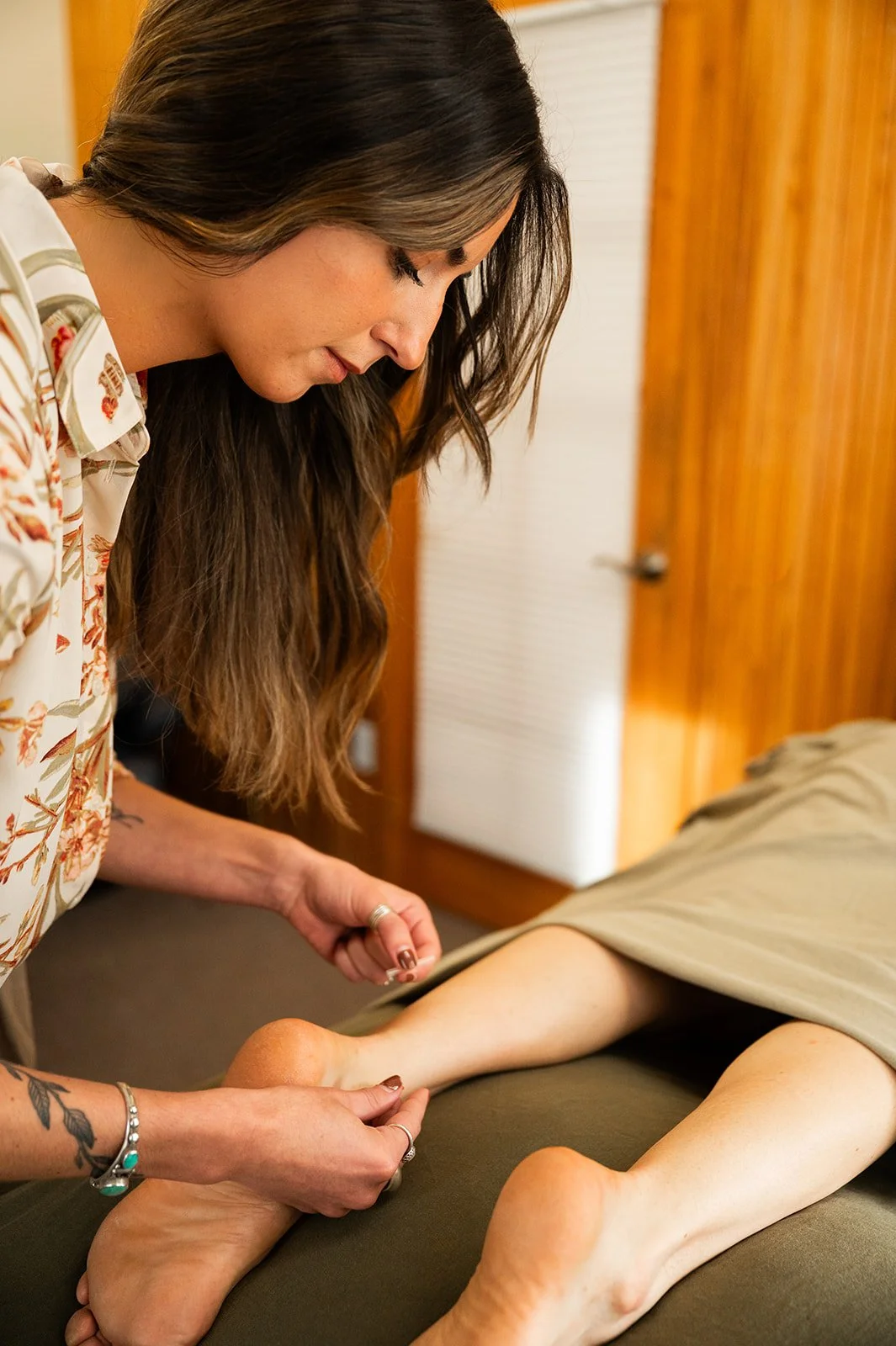
What Is the Difference Between Dry Needling and Acupuncture — and Does It Matter?
Dry needling and acupuncture overlap in technique but differ significantly in diagnostic framework and clinical scope. Dry needling is a modern, anatomy-based approach focused on releasing myofascial trigger points — tight, irritable spots within a muscle that can contribute to local or referred pain. Acupuncture is a broader clinical system that includes both local needling techniques and a whole-body diagnostic model rooted in Traditional Chinese Medicine (TCM), encompassing nervous system regulation, circulation, and functional balance across organ systems.
In practice, both approaches may target similar areas of muscle tension — particularly what TCM refers to as "Ashi points," or tender points that correspond to the site of pain. For a Boulder athlete recovering from a steep descent on the Flatirons or repetitive strain from climbing, both methods can play a role in reducing localized tightness and improving mobility.
Where they differ most meaningfully is in scope. Dry needling is primarily focused on the local neuromuscular system. Acupuncture may also incorporate distal points that influence pain processing, inflammation, and autonomic nervous system regulation. At Jade Mountain Health, these approaches are not treated as competing systems — they are complementary tools that are selected and combined based on each patient's specific presentation.
Licensed acupuncturists complete extensive training in anatomy, needling safety, and clinical technique, including both traditional acupuncture methods and modern trigger point applications. This allows for flexible treatment planning adapted to each patient's needs rather than a one-size-fits-all protocol.
Which Conditions Respond Best to Dry Needling vs. Acupuncture?
Localized muscle tension and clear trigger point patterns often respond well to dry needling techniques, especially when the primary goal is to improve range of motion or reduce acute muscular restriction. Common examples include tight calves after trail running, upper trapezius tension from climbing, or piriformis-related hip discomfort from long days in the saddle.
Acupuncture tends to be the stronger choice when pain is part of a broader pattern involving the nervous system, stress response, or recurring inflammation. Research suggests it may be particularly effective for chronic neck and back pain, migraine and tension-type headaches, stress-related muscle tension, sleep-related recovery issues, and persistent overuse injuries that haven't resolved with local treatment alone.
In many Boulder athletes, these patterns overlap. A runner with knee pain, for example, may also present with hip weakness, calf tightness, and altered movement mechanics that contribute to recurrence. In these cases, combining local trigger point work with acupuncture-based regulation strategies can address both the symptom and its underlying contributors.
At Jade Mountain Health, treatment planning regularly blends both approaches — for example, using trigger point techniques on tight gluteal or calf muscles while also incorporating acupuncture points that support pain modulation and nervous system recovery.
Is Acupuncture Safe to Use Alongside My Current Medications or Supplements?
For most patients, yes — acupuncture is generally safe to use alongside conventional medications and common supplements, though there are a few important considerations. Acupuncture itself does not interact pharmacologically with medications, since it works through the nervous system and local tissue rather than through ingestion or absorption. However, patients taking blood thinners should inform their practitioner, as needling can occasionally cause minor bruising at insertion sites.
Chinese herbal medicine is a different matter. Certain herbs can interact with medications, particularly anticoagulants, thyroid medications, and some antidepressants. At Jade Mountain Health, Andrew Maloney reviews each patient's current medications and supplements before prescribing any herbal formulas, and will advise against or modify herbal treatment when interactions are a concern.
If you're currently seeing a physician or specialist, our practitioners are happy to coordinate care and can communicate with your existing providers when appropriate. Many Boulder patients use acupuncture as a complement to physical therapy, orthopedic care, or mental health treatment — and in most cases, these approaches work well together.
If you're trying to decide between acupuncture and dry needling for an injury or chronic condition, the most useful starting point is a thorough intake — not a predetermined technique. At Jade Mountain Health in Boulder, Colorado, Andrew Maloney and Nicole Bzdel take the time to understand your full clinical picture before recommending an approach, and treatment plans are adjusted as you progress.
Whether you're recovering from a trail injury, managing a recurring overuse pattern, or simply trying to move better in Boulder's demanding outdoor environment, we're here to help you figure out what will actually work. Reach us at (303) 859-3125 or book directly at jademtnhealth.com.
-
Not exactly. Both use thin needles inserted into muscle tissue, but they come from different clinical traditions. Dry needling is a modern, anatomy-based technique focused specifically on releasing myofascial trigger points. Acupuncture is a complete clinical system rooted in Traditional Chinese Medicine that addresses both local pain and broader patterns involving the nervous system, circulation, and organ function. At Jade Mountain Health, licensed acupuncturists are trained in both approaches.
-
Yes. In Colorado, licensed acupuncturists are qualified to perform trigger point needling techniques as part of their scope of practice. They complete significantly more training hours in needling safety and anatomy than most other practitioners who offer dry needling. At Jade Mountain Health, both Andrew Maloney and Nicole Bzdel are licensed acupuncturists with training in both traditional and modern needling techniques.
-
That depends on your specific presentation. Acute muscle tightness with clear trigger points — tight calves after a trail run, upper trap tension from climbing — often responds well to direct trigger point work. If your pain is recurring, involves multiple areas, or seems connected to stress or sleep, acupuncture's broader regulatory approach tends to be more effective. In many cases the answer is both, applied together. The best starting point is a thorough intake appointment at our Boulder clinic.
-
This varies depending on how long you've had the condition and how your body responds. Acute injuries with clear trigger points often show improvement within two to four sessions. Chronic or recurring patterns typically benefit from a longer course of care. At Jade Mountain Health, treatment timelines are assessed individually — we don't use fixed packages, and we adjust the plan as you progress.
-
Coverage varies by plan. Acupuncture is increasingly covered by many insurance providers, particularly for musculoskeletal and pain-related conditions, following broader recognition of its clinical value. Dry needling coverage depends on how it is billed and by whom. We recommend contacting your insurance provider directly to confirm your benefits. Jade Mountain Health can provide documentation to support reimbursement claims where applicable.