
Acupuncture for Hikers and Trail Runners in Boulder: Faster Recovery, Less Pain
Boulder is one of the most active communities in the country — and that comes with a cost. IT band syndrome, plantar fasciitis, knee pain, and hip tightness are among the most common complaints we see at Jade Mountain Health from hikers, trail runners, and outdoor athletes who push their bodies hard on the Flatirons, the Mesa Trail, and beyond.
Acupuncture is increasingly used as a recovery tool within Boulder’s athletic community — not as an alternative to physical therapy, but as a meaningful complement to it. For many athletes, the goal isn’t just pain relief—it’s staying consistent with training over time.
Located in the Wonderland Hills neighborhood, just off Broadway and a ten-minute drive from Pearl Street, our clinic provides a focused clinical environment where Traditional Chinese Medicine is applied to the demands of high-performance athletes in the Front Range. Whether you are training for a fastpacking trip in the Indian Peaks or managing the repetitive impact of downhill running on Mount Sanitas, understanding how acupuncture works can help you stay on the trail longer.
What Makes Acupuncture an Effective Recovery Tool for Boulder's Active Population?
Acupuncture can support athletic recovery by helping regulate the nervous system, reduce inflammation, and improve local circulation in overworked tissues. Together, these effects may help the body recover more efficiently from repetitive strain and high-impact activity.
From a biomedical perspective, acupuncture stimulates the release of endorphins and enkephalins — the body’s natural pain-relieving chemicals. It may also influence how pain signals are processed, consistent with the gate control theory of pain. Many patients notice a reduction in lingering soreness as well as a shift out of a heightened stress response into a more relaxed, recovery-oriented state.
At the local level, the mild, controlled stimulation from a thin acupuncture needle increases circulation to targeted areas. This helps deliver oxygen and nutrients while assisting in the removal of inflammatory byproducts. In tissues like the Achilles tendon or plantar fascia — which often have limited blood supply — this effect can be especially helpful.
From a Traditional Chinese Medicine (TCM) perspective, repetitive strain is often understood as a stagnation of Qi and Blood. Long climbs and descents in the Front Range can place repeated stress on the Gallbladder and Bladder meridians, which run along the lateral and posterior legs. Over time, these channels can become relatively overactive or stagnant, leading to pain, tightness, or fatigue.
Andrew C. Maloney draws on his training in Taiwanese and Japanese acupuncture to select points that help restore smooth flow through these channels. This approach addresses both local discomfort and broader patterns contributing to overuse.
Which Injuries and Conditions Do Boulder Trail Runners Most Often Treat With Acupuncture?
The most common conditions treated with acupuncture in Boulder’s trail running and hiking community are overuse injuries affecting the lower kinetic chain, where repetitive impact and uneven terrain create strain across the hips, knees, and ankles. Acupuncture is recognized by the World Health Organization for treating a wide range of musculoskeletal conditions, many of which are relevant to active individuals.
These commonly include:
IT band syndrome and lateral hip pain
Plantar fasciitis and chronic heel pain
Patellofemoral pain syndrome (runner’s knee)
Achilles tendinitis and calf strain
Hip flexor tightness and psoas-related discomfort
Medial tibial stress syndrome (shin splints)
Ankle instability following previous sprains
Acupuncture can be particularly useful for these conditions because it addresses both local symptoms and contributing movement patterns. For example, plantar fasciitis is rarely just a foot issue. It often involves tightness in the calves, reduced mobility through the posterior chain, and load distribution issues higher up the leg.
At Jade Mountain Health, we take a broader view. Treatment may include points along the Bladder meridian to address the entire posterior chain, often providing more lasting relief than focusing on the foot alone. Clinical evidence suggests acupuncture may also help manage inflammation associated with early-stage bone stress–related discomfort, which can be relevant for runners increasing mileage on Boulder’s hard-packed trails.
We may also incorporate adjunct therapies such as cupping or moxibustion when appropriate. Moxibustion involves gently warming acupuncture points and is often used when pain presents with stiffness or sensitivity to cold — a pattern many athletes notice during seasonal changes in the Front Range climate.
How Does Acupuncture Address the Compensatory Movement Patterns Caused by Boulder’s Technical Terrain?
Acupuncture can help address compensatory movement patterns by releasing areas of muscular tension that develop when certain muscles overwork to stabilize a joint. On Boulder’s uneven and technical terrain, the body often adapts by creating asymmetrical loading patterns, which can lead to persistent discomfort or inefficient movement.
When navigating steep inclines or rocky descents, the body frequently recruits secondary stabilizers such as the tensor fasciae latae (TFL) or deep hip rotators. Over time, these muscles may remain overactive, contributing to imbalances like altered pelvic alignment or uneven gait mechanics. In TCM, this can be understood as a pattern of stagnation affecting both movement and circulation.
Through precise needle placement, acupuncture can help reduce excess tension in overactive muscles while supporting more balanced function across the system. In some cases, a localized twitch response may occur, which can help the muscle return to a more normal resting state.
Nicole Bzdel and the team at Jade Mountain Health focus on these functional relationships during treatment. Pain in the knee, for example, may be influenced by weakness in the gluteus medius or tension in the lower back. By identifying and addressing these patterns, acupuncture can help activate underperforming muscles while reducing overactivity elsewhere.
The result is often improved movement efficiency and a more resilient system overall — allowing Boulder athletes to better handle the demands of long miles, elevation gain, and technical terrain without the same cycle of recurring “niggles.”
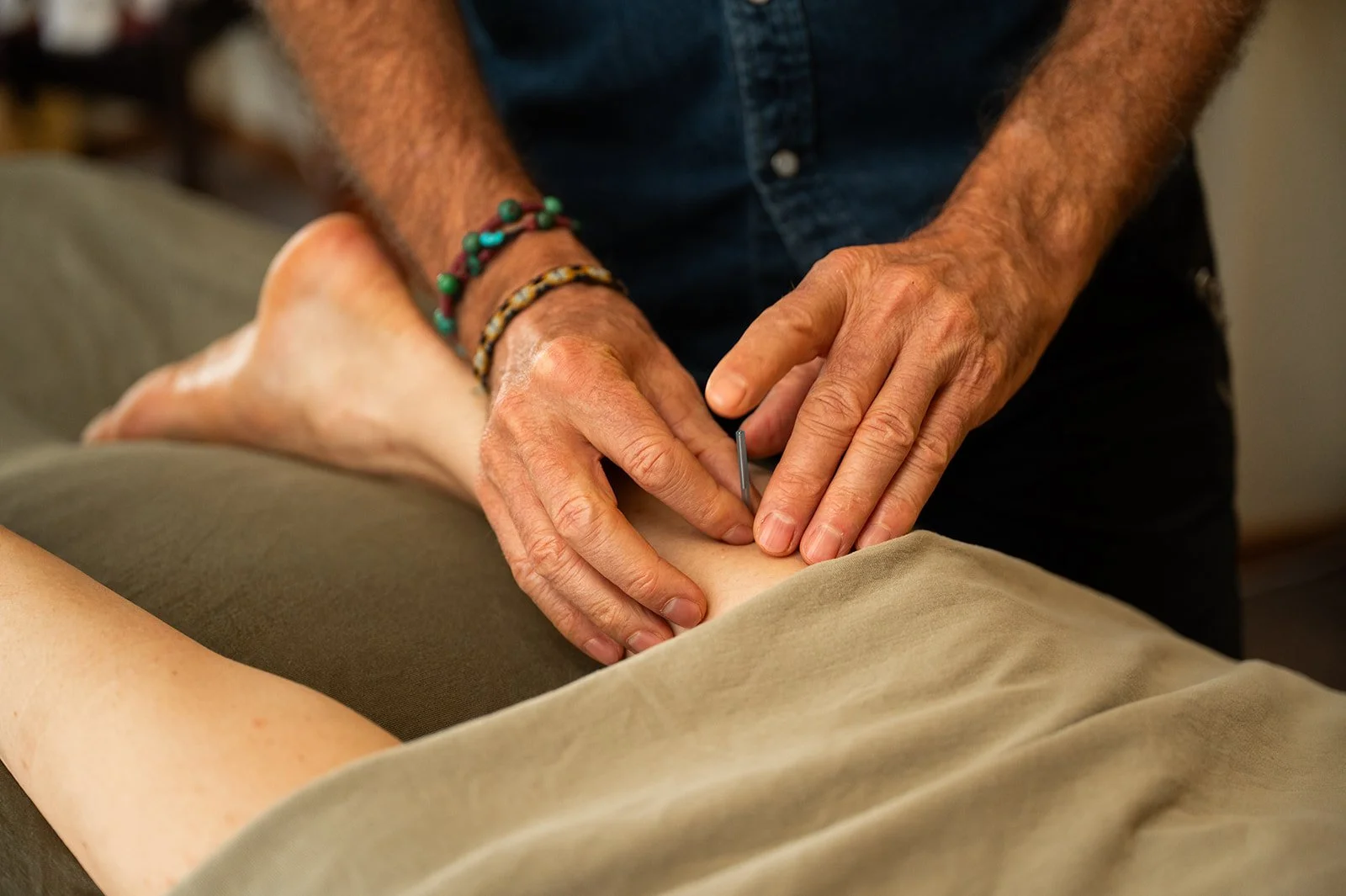
Better Movement Starts at Jade Mountain Health
Living in Boulder means staying active — and staying active means taking recovery seriously. Acupuncture offers a practical, evidence-informed way to support your body through the demands of hiking, trail running, and mountain life.
At Jade Mountain Health, located in Wonderland Hills off Broadway and just a short drive from Pearl Street, we work with athletes who want to move better, recover more efficiently, and stay consistent on the trails. If you're ready to explore what acupuncture can do for your recovery, we’d love to hear from you. You can reach Jade Mountain Health at (303) 859-3125 or schedule directly online