
What Is Scalp Acupuncture? A Boulder Guide to Neuroacupuncture and Brain Health
Most people are familiar with traditional acupuncture — fine needles placed along the body's meridian pathways to support balance and reduce pain. Scalp acupuncture is different. It is a specialized form of neuroacupuncture that uses mapped regions of the scalp corresponding to functional areas of the brain.
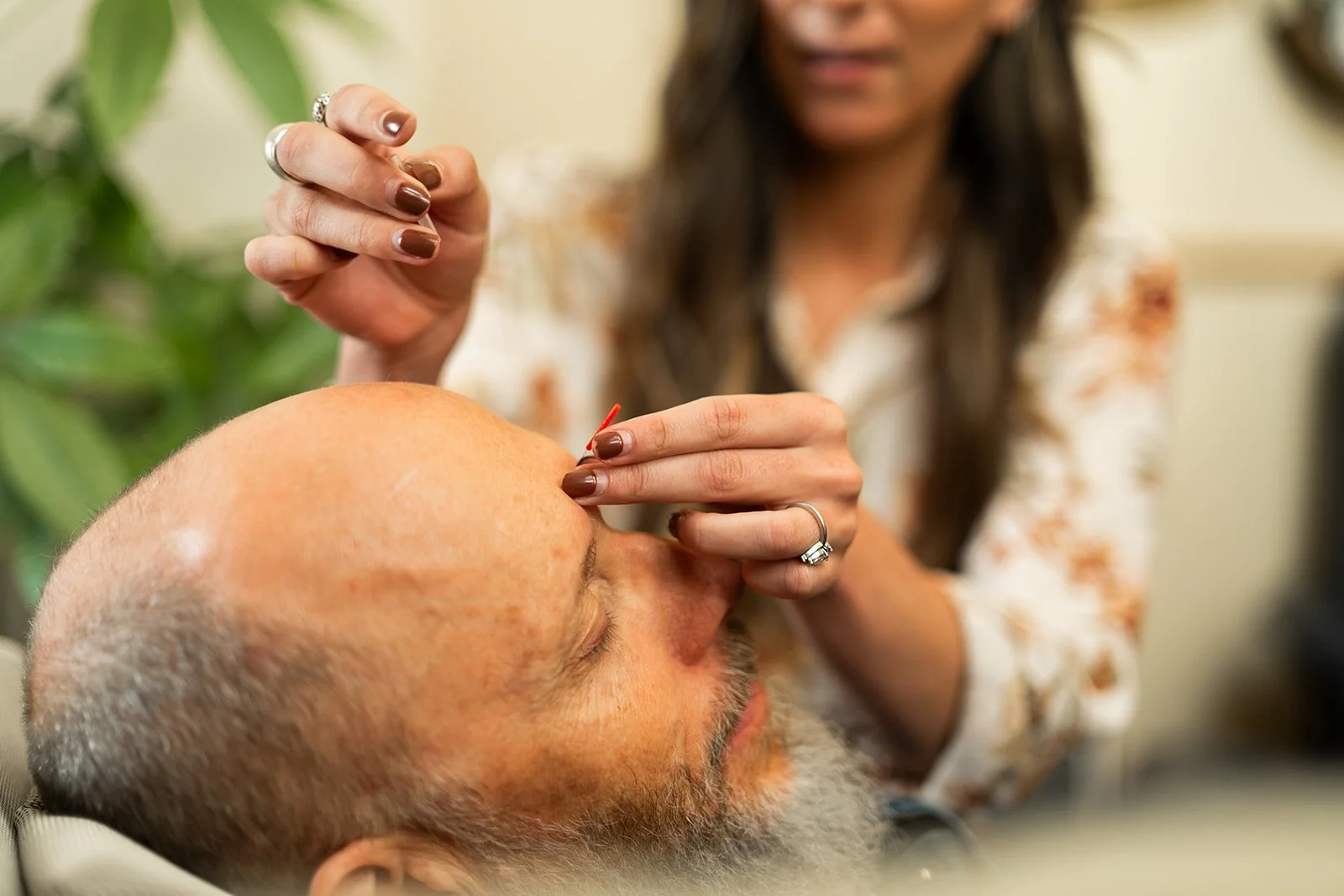
At Jade Mountain Health in Boulder, Andrew Maloney has trained in both Taiwanese and Japanese neuroacupuncture lineages — a less common combination that informs a precise clinical approach to neurological and pain-related conditions. These include migraines, post-stroke rehabilitation support, PTSD-related symptoms, and movement disorders such as Parkinson's disease.
Located in the Wonderland Hills neighborhood just off Broadway, our clinic is a short ten-minute drive from Pearl Street, offering North Boulder residents access to this specialized form of care. This post explores how scalp acupuncture bridges Traditional Chinese Medicine theory and contemporary neuroscience to support recovery in complex neurological conditions.
How Is Scalp Acupuncture Different From Traditional Body Acupuncture?
Scalp acupuncture differs from traditional body acupuncture by using microsystem mapping, in which specific regions of the scalp are associated with functional areas of the brain — such as motor, sensory, and language networks — rather than the meridian pathways used in whole-body treatment.
While traditional acupuncture focuses on the flow of Qi through meridians across the body, scalp acupuncture — often called neuroacupuncture — uses the scalp as a highly responsive interface for the nervous system. Needles are inserted at a shallow angle into the superficial connective tissue layer of the scalp, not into deeper muscular structures.
One proposed mechanism involves stimulation of peripheral nerve endings and modulation of cortical activity. Research suggests acupuncture may influence neuroplasticity — the brain's capacity to adapt and reorganize — which is particularly relevant in rehabilitation contexts where the nervous system is recovering from injury or dysfunction.
Because the scalp is richly innervated and highly vascular, stimulation in this area may produce localized neurological effects. In clinical practice, scalp acupuncture is often combined with body acupuncture to support both systemic regulation and targeted neurological response.
In Traditional Chinese Medicine, scalp acupuncture is frequently applied in cases that align with what are described as "wind" patterns — presentations that may include tremors, sudden weakness, or abrupt changes in neurological function. It provides a focused, clinically oriented approach while remaining grounded in broader TCM principles.
What Conditions Does Scalp Acupuncture Address? From Migraines to Post-Stroke Recovery
Scalp acupuncture is used as part of integrative care for a range of neurological and neuromuscular conditions, including chronic migraines, post-stroke rehabilitation, traumatic brain injury (TBI), and movement disorders such as Parkinson's disease. It is typically applied as part of a broader care plan rather than as a stand-alone treatment.
Clinical evidence suggests acupuncture may help reduce the frequency and intensity of chronic headaches by modulating pain pathways and influencing blood flow regulation. In post-stroke care, scalp acupuncture is used to support functional recovery by engaging surrounding neural pathways, which may assist with improvements in mobility, coordination, and motor control.
Beyond physical rehabilitation, scalp acupuncture is used in some cases involving stress-related and cognitive symptoms. Research suggests it may support symptoms associated with PTSD, anxiety, and cognitive fatigue, particularly when these are part of a broader nervous system imbalance.
At Jade Mountain Health, scalp acupuncture is commonly applied for conditions including Complex Regional Pain Syndrome (CRPS) and phantom limb pain, essential tremor and coordination difficulties, aphasia and other speech or language challenges, chronic vertigo and vestibular disorders, and sensory changes or neuropathy following injury or surgery.
Because it targets the central nervous system through peripheral stimulation, scalp acupuncture can be a useful option for patients who have reached a plateau with other forms of care — including physical therapy or traditional body acupuncture alone. It is best understood as a targeted, neurologically informed tool within a broader integrative approach.
Is Scalp Acupuncture Safe to Combine With Other Treatments I'm Already Receiving?
Yes — scalp acupuncture is generally safe to receive alongside other medical or rehabilitative care, and it is frequently used in exactly that context. When performed by a licensed and trained practitioner, it carries a strong safety profile with minimal side effects.
Needles are inserted into the superficial connective tissue layer of the scalp — there is no penetration of the skull or contact with brain tissue. Most patients describe the sensations as pressure, heaviness, or a dull ache rather than sharp pain. Minor bruising or temporary tenderness at needle sites can occur but typically resolves quickly.
Scalp acupuncture is often used alongside physical therapy, occupational therapy, and conventional neurological care. At Jade Mountain Health in Boulder, Andrew Maloney discusses each patient's full care picture before treatment, including any current medications, supplements, or other therapies, to ensure the approach is coordinated and appropriate.
One practical advantage of scalp acupuncture in a rehabilitation context is that it can be combined with functional movement during the session itself — guided movement, speech tasks, or other active exercises — allowing the nervous system to be engaged during active recovery rather than requiring complete stillness. This makes it a well-suited complement to other rehabilitation modalities for patients with neurological conditions.
If you're considering scalp acupuncture for a neurological condition or want to explore whether it might support your recovery, we'd welcome the conversation. At Jade Mountain Health, we offer this specialized form of care to the Boulder community as part of a thoughtful, integrative approach to complex health concerns. Whether you're managing chronic symptoms or working toward rehabilitation goals, our clinic in the Wonderland Hills neighborhood — just off Broadway — offers a calm, focused environment for that work. Reach us at (303) 859-3125 or schedule an appointment at jademtnhealth.com.
Acupuncture for Anxiety: Frequently Asked Questions
-
Yes. Acupuncture works by influencing the autonomic nervous system to shift the body from a "fight or flight" (sympathetic) state to a "rest and digest" (parasympathetic) state. Research suggests it helps regulate neurotransmitters like serotonin and GABA, which are essential for mood stability and emotional regulation.
-
While many patients feel a sense of relaxation during their first visit, long-term relief typically develops over a course of 6 to 10 sessions. Because the effects are cumulative, consistent weekly or bi-weekly treatments are recommended initially to stabilize the nervous system.
-
Absolutely. Traditional Chinese Medicine views emotional and physical health as interconnected. By addressing the underlying nervous system imbalance, patients often see secondary improvements in sleep quality, digestive regularity (the "nervous stomach"), and chronic muscle tension.
-
Acupuncture is an excellent complementary therapy. It works well alongside Western medical treatments and talk therapy by providing a physiological "reset" for the body. We recommend discussing your treatment plan with your primary care provider or therapist as you integrate acupuncture into your routine.
-
Our clinic is located in the Wonderland Hills neighborhood of North Boulder, just off Broadway on Poplar Ave. We are a ten-minute drive from Pearl Street and serve patients from across the Front Range looking for a quiet, clinical environment.