
Knee Pain in Boulder: How Acupuncture and Dry Needling Support Recovery Without Surgery
Knee pain is an almost universal experience among Boulder's active population — whether you're a runner dealing with patellofemoral syndrome, a skier managing patellar tendinitis, or someone facing the slower grinding discomfort of early osteoarthritis. At Jade Mountain Health, we treat knee pain using a combination of acupuncture, dry needling for trigger point release, and electroacupuncture for enhanced pain modulation. Our approach is always to identify the muscular, structural, and systemic factors contributing to your knee pain — not just address where it hurts. Andrew Maloney, L.Ac. and Nicole Bzdel, L.Ac. work with local hikers, cyclists, and runners to restore joint mobility and keep them active in the Flatirons and throughout the Front Range.
What Types of Knee Pain Does Acupuncture Treat Most Effectively?
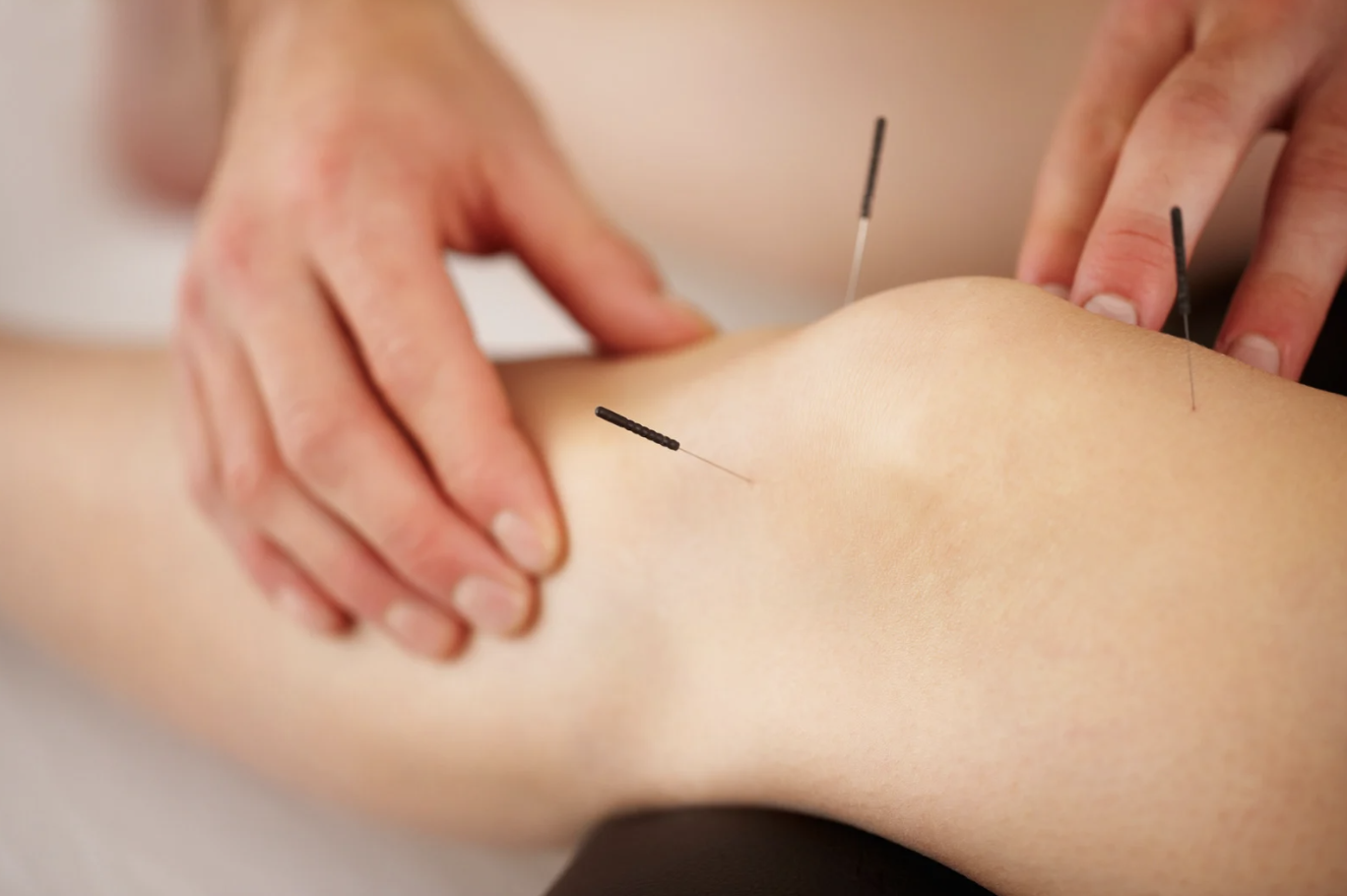
Acupuncture is most effective at treating knee pain rooted in myofascial imbalance, inflammatory conditions, and chronic joint degeneration — specifically patellofemoral syndrome, IT band friction, and early-stage osteoarthritis. By inserting thin needles into specific motor points and meridian locations, we can release the muscular tension in the quadriceps, hamstrings, and calves that often pulls the patella out of alignment. This is particularly relevant for Boulder residents whose knee pain is a byproduct of overused muscles from steep trail descents or high-mileage cycling.
From a Traditional Chinese Medicine perspective, knee pain is often categorized as Bi syndrome — a blockage of Qi and Blood in the joint. When these vital substances cannot circulate freely, the joint becomes stiff, swollen, and painful. Acupuncture works to clear the channels and reduce the localized stagnation that causes discomfort. Needling local points such as ST35 (Dubi) and Heding is commonly used to support circulation within the joint, which can benefit patients dealing with the grinding sensation of meniscus wear or early osteoarthritis.
We also use dry needling and electroacupuncture to target deep trigger points in the vastus lateralis and medialis — muscular knots that are often the hidden drivers of knee instability and chronic inflammation. Clinical evidence suggests that acupuncture can modulate pain signals by supporting the release of endorphins and reducing pro-inflammatory activity in the joint. Whether you're dealing with acute patellar tendinitis or a nagging post-surgical ache, the approach at Jade Mountain Health addresses both the internal inflammatory environment and the external muscular pull on the joint.
How Many Acupuncture Sessions Does It Take to Relieve Knee Pain — and What Does the Research Show?
For most acute knee injuries, patients typically notice meaningful reduction in pain within three to six sessions, while chronic conditions like osteoarthritis generally require a longer course of treatment to stabilize the joint and support lasting relief. The initial phase focuses on reducing inflammation and interrupting the pain cycle, while subsequent sessions aim to strengthen surrounding tissues and prevent recurrence. Because acupuncture effects are cumulative, consistency in the first few weeks is the most important factor in determining the speed and durability of recovery.
The research on acupuncture for knee pain is broadly supportive of its clinical value. The WHO recognizes acupuncture's ability to treat more than 43 commonly encountered clinical disorders, and studies indicate that acupuncture offers meaningful improvement for patients with chronic knee osteoarthritis — often comparing favorably to standard care in terms of long-term functional outcomes. These findings are particularly relevant for Boulder patients who prefer non-pharmacological approaches and want to stay active through recovery rather than waiting out a medication protocol.
At Jade Mountain Health, Andrew and Nicole tailor session frequency to each patient's activity level and the severity of the joint issue. For a runner training for a race in the Flatirons, a more intensive short-term protocol may be appropriate to avoid losing training momentum. For someone focused on long-term joint health and general wellness, a maintenance schedule of once or twice a month is often sufficient once initial pain has resolved. This individualized approach allows us to set clear expectations while respecting the performance goals of our patients.
Can Acupuncture Help With Post-Surgical Recovery and Range of Motion After Knee Surgery?
Acupuncture is a strong adjunctive therapy for post-surgical recovery because it helps reduce swelling, manage post-operative pain, and address the scar tissue and muscular inhibition that can limit range of motion. After procedures like ACL reconstruction or meniscus repair, surrounding muscles often go into protective spasm. Acupuncture helps re-engage those muscles and improves local circulation — both of which support the efficient delivery of nutrients needed for tissue remodeling and graft integration.
In TCM, surgery is understood as a significant disruption to local Qi and Blood, often producing stasis that manifests as bruising, stiffness, and a persistent heavy feeling in the limb. By needling points around the surgical site alongside distal constitutional points, we help the body resolve that stasis more effectively. Many patients in Boulder, Colorado report that adding acupuncture to their physical therapy routine allows them to progress through rehabilitation more comfortably and regain full range of motion faster than with physical therapy alone.
In post-surgical cases, we also frequently incorporate moxibustion — a warming therapy using dried mugwort burned near acupuncture points — when the knee presents as cold, stiff, and slow to recover. This is particularly useful for patients who notice increased stiffness during Front Range winters. By addressing the neurological, vascular, and energetic dimensions of recovery together, Jade Mountain Health provides a more complete support system for patients working to get back to the trails or the bike path.
If you're ready to explore what acupuncture can do for knee pain — whether you're trying to avoid surgery or accelerate recovery after one — we'd love to connect. At Jade Mountain Health in Boulder, Colorado, Andrew and Nicole take a direct, lineage-trained approach to musculoskeletal care that respects both your intelligence and your goals. Call us at (303) 859-3125 or schedule online.
Frequently Asked Questions About Acupuncture for Knee Pain in Boulder
-
Dry needling and acupuncture use the same tool — a thin filiform needle — but operate from different frameworks. Dry needling targets myofascial trigger points based on Western anatomy, while acupuncture works within the TCM meridian system to address both local and systemic imbalances. At Jade Mountain Health, Andrew Maloney is trained in both approaches and will often integrate them depending on what your presentation calls for.
-
Yes. Even when structural damage is present — such as a partial meniscus tear or cartilage thinning — acupuncture can meaningfully reduce pain and inflammation, improve joint mobility, and support the surrounding muscular structures. It won't reverse structural changes, but many patients with confirmed damage find that acupuncture reduces their symptoms enough to delay or avoid surgery.
-
Electroacupuncture involves passing a low-frequency electrical current between pairs of needles already placed at acupuncture points — it is not the same as a TENS unit. For knee pain, it is used to amplify stimulation to the local tissue and enhance the pain-modulating effects of the treatment. Most patients describe a mild pulsing or buzzing sensation that is comfortable and often deeply relaxing.
-
It can be, though the approach will differ from a standard musculoskeletal protocol. For patients with hypermobility, the focus shifts toward stabilizing the surrounding musculature and supporting Kidney Qi — which in TCM governs the bones, joints, and foundational structural integrity. Andrew will assess your specific presentation before recommending a treatment plan.
-
Acupuncture can generally begin within the first 48–72 hours of an acute injury, once the initial inflammatory response has peaked. Early treatment can help reduce swelling, manage pain, and prevent the muscular compensation patterns that often develop when people guard an injured joint — and that frequently become problems of their own.